
Last Updated: October 28, 2026
Quick Summary
Laser treatment is the strongest professional option for crepey skin, using controlled heat to trigger collagen rebuilding, and it suits crepey texture on the neck, chest, and face when you can accept days of redness and peeling. Chemical peels only refine dull surface texture and mild fine lines, while Sculptra adds an injectable collagen stimulator for thin skin on the arms, legs, and neck with minimal downtime.
- Laser resurfacing causes days of redness and peeling, so skip it if you cannot avoid sun exposure.
- Skip chemical peels if you expect them to firm loose, thin skin on their own.
- Sculptra works as an injectable collagen stimulator with minimal downtime.
- Match the treatment to the area: laser for neck, chest, and face texture.
- Darker skin tones need a provider experienced with their skin type before laser.
Table of Contents
- Laser Treatment for Crepey Skin: What It Delivers and Who It Suits
- Chemical Peel for Crepey Skin: Realistic Results and Limits
- Sculptra for Crepey Skin: How Collagen Stimulation Fits In
- Choosing the Right Treatment for Your Skin
- Frequently Asked Questions
Laser Treatment for Crepey Skin: What It Delivers and Who It Suits
Laser treatment for crepey skin uses controlled heat to trigger a wound-healing response that builds fresh collagen. If you’re weighing it against other options, see our guide to non-surgical skin tightening treatments before you commit. It’s the heaviest hitter here, with the most recovery time.
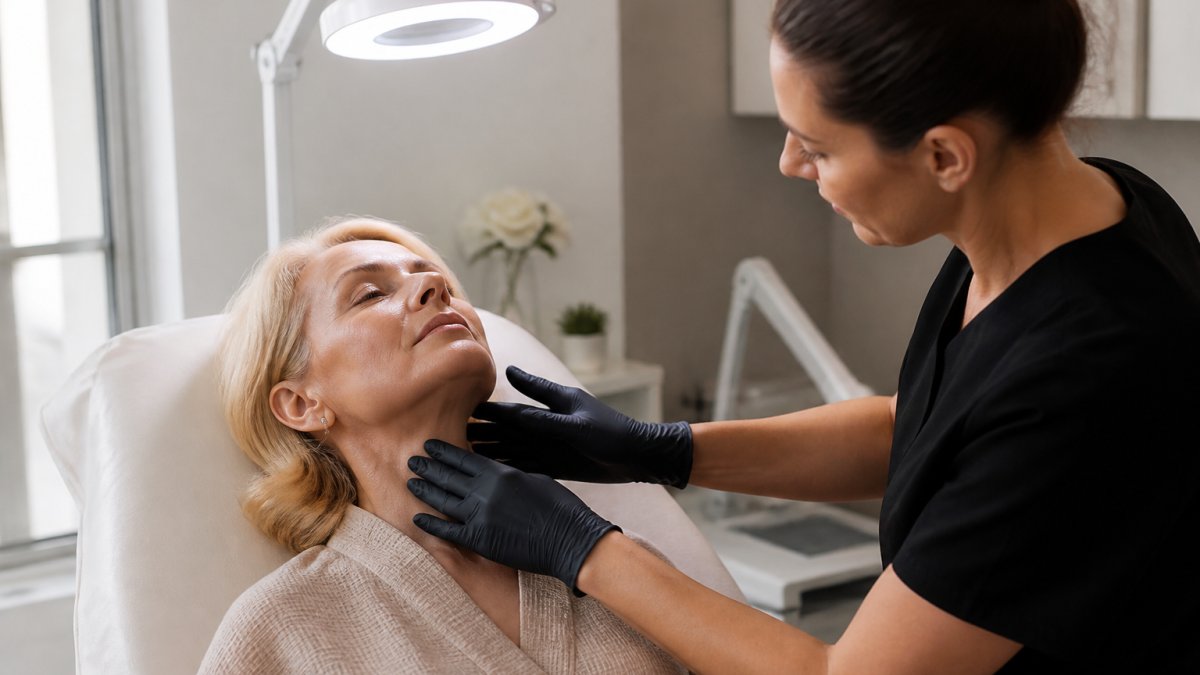
Best for: crepey texture on the neck, chest, and face when downtime is acceptable.
Skip if: you have a darker skin tone without a provider experienced in your skin type, or you can’t take time off from sun exposure.
Chemical Peel for Crepey Skin: Realistic Results and Limits
Best for: dull, rough surface texture and mild fine lines. For the bigger picture on clinical skincare for aging skin, explore our clinical skincare guide.
Skip if: you’re expecting a peel alone to firm loose, thin skin.
Sculptra for Crepey Skin: How Collagen Stimulation Fits In
| Treatment | How It Works | Typical Downtime | Best For |
|---|---|---|---|
| Laser resurfacing | Heat-driven collagen remodeling | Days of redness, peeling | Neck, chest, face texture |
| Chemical peel | Exfoliates surface layers | Mild flaking | Dull tone, fine lines |
| Sculptra | Injectable collagen stimulator | Minimal | Thin skin on arms, legs, neck |
Choosing the Right Treatment for Your Skin
At GloVolution, we build collagen-focused treatment plans for mature, hormonally shifting skin, and that can include options like a Hydra Facial to keep surface texture hydrated between deeper treatments, or Facial Peels when a gentler, surface-level refresh is the right call.
Frequently Asked Questions
What professional treatment gets rid of crepey skin?
No single treatment erases crepey skin, and anyone promising that is overselling. In-office options such as laser resurfacing, radiofrequency microneedling, chemical peels, and injectable biostimulators like Sculptra work by prompting collagen and elastin production over time. Results build across sessions and months, not overnight. A provider should assess your skin texture, laxity, and how much sun exposure the area has had before recommending one. Expect improvement, not perfection.
How do laser treatments compare with chemical peels for crepey skin?
Laser treatment for crepey skin tends to reach deeper layers and carry more downtime, with redness and sensitivity lasting days to weeks depending on the device. Chemical peels sit on the lighter end, improving surface texture and dullness with shorter recovery, though results are gentler. Peels suit early crepey changes and maintenance; lasers suit more established laxity. Your skin tone and how much time you can take off work should guide the choice as much as the treatment itself.
Can crepey skin on the arms and legs be improved without surgery?
Yes, non-surgical options can improve crepey skin on arms and legs, though body areas respond more slowly than the face because the skin is thicker and gets less consistent care. Radiofrequency, microneedling, and collagen-stimulating injectables are commonly discussed for these zones. Sun protection matters more here than anywhere, since ultraviolet radiation is a major driver of thin, crepey texture. Ask a provider to set realistic expectations for session count and interval before you commit.
