
Table of Contents
- Why Clinical Facials Provide Results That Last
- Clinical Facial vs Spa Facial: What’s the Real Difference?
- Medical Grade Skincare Benefits and How Often to Get Professional Facials
- Frequently Asked Questions
Last Updated: September 7, 2026
Why Clinical Facials Provide Results That Last
Many women over 40 have shelves full of products that promised glowing skin and delivered disappointment. Topical skincare can’t reach the deeper layers where visible aging begins. Clinical facials target those structures with professional-grade technology and active ingredients at concentrations home care cannot match.
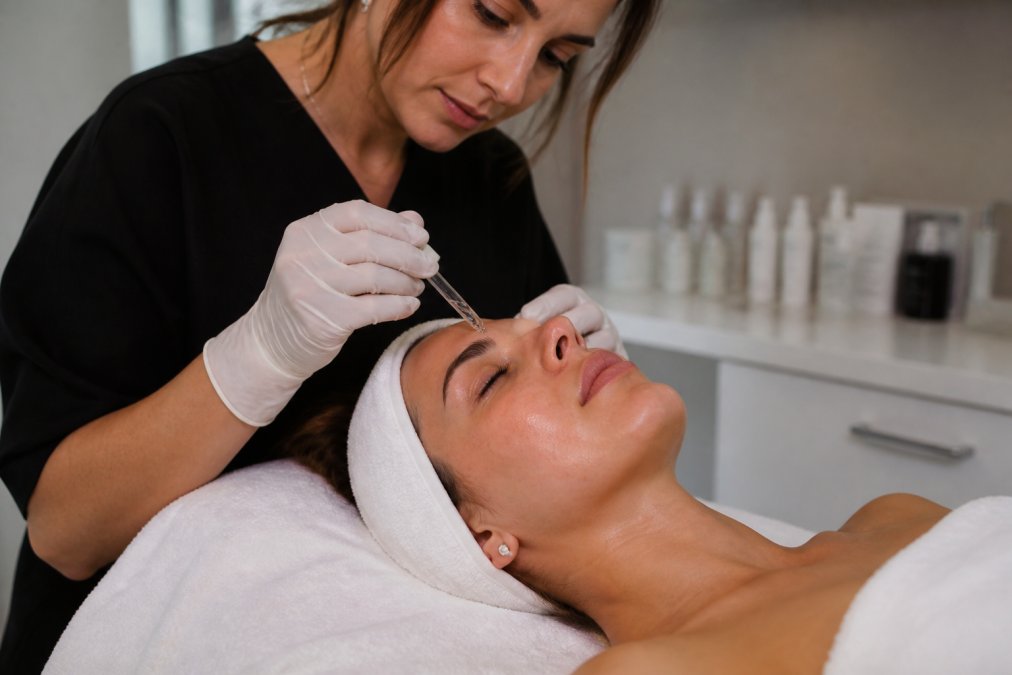
Clinical Facial vs Spa Facial: What’s the Real Difference?
Spa facials prioritize relaxation and immediate glow, while clinical facials focus on treating conditions like hyperpigmentation, acne, rosacea, and loss of elasticity. Clinical products use higher concentrations of bioavailable active ingredients with technologies that enhance absorption into the dermal layer, and an esthetician with advanced training can customize the plan on the spot.
Spa facials often include heavy massage and fragrant products that can irritate sensitized or menopausal skin. If you’re dealing with rosacea, breakouts, or reactive skin, ask whether the treatment includes barrier-supporting steps before you book.
Medical Grade Skincare Benefits and How Often to Get Professional Facials
Medical grade skincare benefits extend beyond the treatment chair. These products use higher purity standards and precise delivery systems, so active ingredients penetrate more effectively, especially important since skin becomes thinner and more reactive with age.
Consistency determines how long results last. A single facial can improve texture and hydration, but collagen stimulation requires a series, typically several facials spaced weeks apart, then maintenance every four to six weeks.
| Treatment Focus | Typical Series | Maintenance | Expected Outcome |
|---|---|---|---|
| Collagen stimulation | 4-6 sessions, 2-3 weeks apart | Every 4-6 weeks | Firmer, plumper skin texture |
| Hyperpigmentation | 3-5 sessions, 3-4 weeks apart | Every 6-8 weeks | More even tone, faded dark spots |
| Acne management | 4-6 sessions, 2 weeks apart | Monthly | Reduced breakouts, refined pores |
Clinical facials are a cumulative investment, not a quick fix. Budget for a series and commit to the maintenance schedule, or you’ll lose the ground you gained.
Clinical facials involve advanced training, medical-grade products, and technology that produces measurable changes. Post-treatment care determines much of your outcome; sun protection, gentle cleansing, and barrier-supporting moisturizers are non-negotiable afterward. For deeper concerns like textural scarring or stubborn pigmentation, options such as Scar Revision & Camouflage or a Hydra Facial can be layered into your plan to address what standard facials alone cannot.
For women in their 40s and beyond, the question is rarely whether you need clinical intervention, but which approach fits your skin’s current state. Menopause-related dryness, thinning, and loss of elasticity respond well to collagen-stimulating protocols, while persistent acne or scarring calls for a different strategy entirely. That’s the standard we hold at GloVolution, where advanced facial treatments are customized around your skin’s changing needs rather than a generic protocol.
Bring photos of your skin from a few years ago to your consultation. Comparing past and present skin helps your esthetician distinguish age-related changes from product reactions or sun damage, which require different treatment approaches.
The science behind clinical facials continues to evolve, with dermatological research on skin aging confirming that structural changes in the dermal layer drive most visible signs of aging. Understanding why clinical facials provide results comes down to accepting one premise: skin is an organ that responds to targeted, professional intervention. If you’re ready to move beyond guesswork, book a consultation with GloVolution and build a plan designed for the skin you have now.
Frequently Asked Questions
How long after a clinical facial do you see results?
Many women notice improved skin texture and glow within 24 to 48 hours after their first clinical facial. Deeper changes, like increased collagen production and improved skin elasticity, build gradually over several weeks. Most professionals recommend a series of treatments to address concerns like hyperpigmentation or acne scars. Your skin’s cellular turnover cycle takes time, so consistent appointments matter more than a single dramatic result.
Are clinical facials worth the investment for aging skin?
For aging skin, clinical facials target the dermal layer where collagen loss happens. Professional-strength active ingredients and clinical techniques stimulate collagen production more effectively than at-home products. Clinical facials offer a more direct path to addressing deeper structural changes in the skin. A consultation can help you determine if you are a good candidate and what results you can realistically expect.
What is the difference between a clinical facial and a spa facial?
A spa facial focuses on relaxation and immediate glow using gentle products and massage. A clinical facial is a treatment plan designed to address specific skin concerns like rosacea, acne, or hyperpigmentation. Clinical facials use medical-grade active ingredients, professional-strength exfoliation, and advanced technologies to affect the skin at a deeper level. They require a proper skin assessment and are performed by licensed professionals with advanced training.