
Table of Contents
- What Is Paramedical Scar Camouflage?
- Scar Revision Versus Plastic Surgery: Which Fits Your Goals?
- How Many Sessions for Scar Camouflage and What to Expect
- Frequently Asked Questions
Last Updated: September 8, 2026
What Is Paramedical Scar Camouflage?
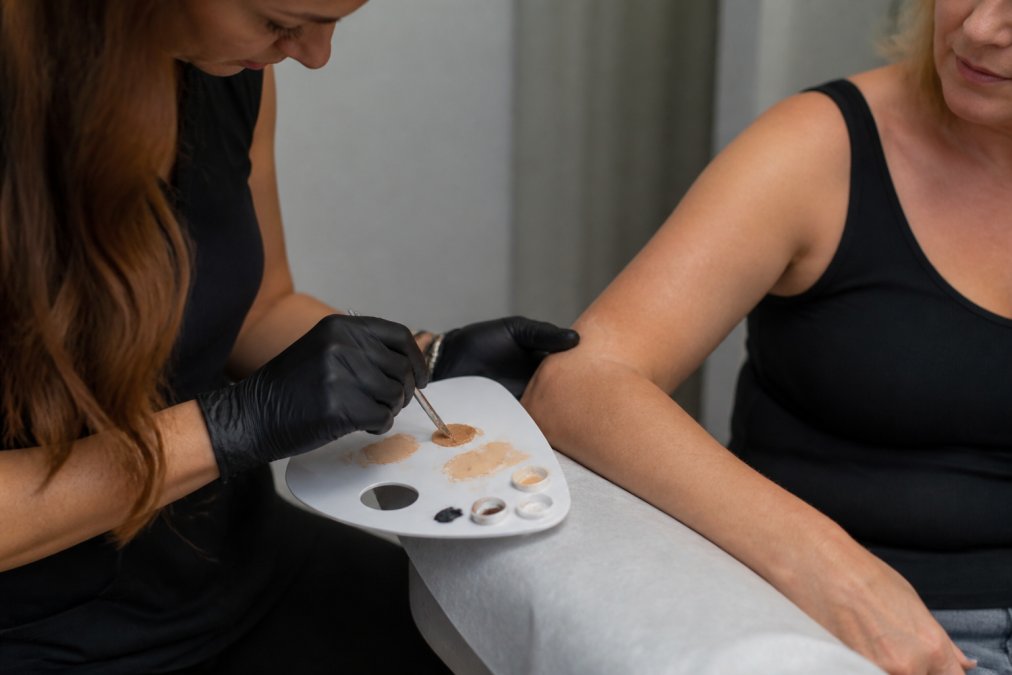
Paramedical scar camouflage is a specialized form of medical micropigmentation that deposits custom-blended pigments into the dermal layer of scar tissue to reduce visual contrast. Unlike cosmetic tattooing, it is a corrective procedure rooted in clinical safety and color theory, designed for surgical scars, burn scars, acne scarring, and hypopigmentation.
The treatment is non-invasive and matches pigment to your surrounding skin tone, so the scar blends seamlessly.
Scar Revision Versus Plastic Surgery: Which Fits Your Goals?
The biggest mistake women make is assuming a scar means choosing between living with it or going under the knife. Scar revision versus plastic surgery is not an either-or decision.
Plastic surgery physically alters the tissue, carrying cost, downtime, and new scarring risks. Paramedical scar camouflage works on the surface, using pigment blending to address visual contrast, and is ideal for flat, healed scars where texture has settled but color remains obvious. For those whose scars sit alongside other body image concerns, pairing this with Body Contouring can support an overall sense of confidence in how you look and feel.
Never attempt scar camouflage on a wound that is still healing or a scar less than six to twelve months old. Pigment retention is unpredictable on immature tissue, and you risk a result that looks patchy or uneven.
Paramedical camouflage suits flat, healed scars with color mismatch, stretch mark camouflage, and hypopigmentation; surgical revision better fits raised, puckered, or mobility-restricting scars where texture is the primary concern.
How Many Sessions for Scar Camouflage and What to Expect
Most clients need two to three sessions for scar camouflage to achieve optimal pigment retention and color depth, since scar tissue is fibrous and often resists pigment uptake.
Plan for a minimum of two sessions spaced four to eight weeks apart. The healing process between visits lets you and your artist assess pigment retention and adjust the blend before adding more color.
A typical journey starts with a consultation and patch test, followed by a first session of custom pigment blending lasting one to two hours. After four to eight weeks of healing, a follow-up session corrects color and reinforces the result, with touch-ups every one to three years as pigment fades.
Expect a sensation similar to fine needle work; topical anesthetics are standard. Aftercare is straightforward: keep the area clean, avoid sun exposure, and resist picking at flaking pigment.
Bring photos of your scar from different angles and lighting to your consultation. This helps your artist understand how light hits the tissue, which directly informs how they blend color to reduce visual contrast in real-world conditions.
The choice between living with a scar you dislike and exploring restorative care is deeply personal. Paramedical scar camouflage offers a middle path that honors your body’s story while giving you agency, and the right plan starts with a conversation, not a commitment.
Frequently Asked Questions
Is paramedical scar camouflage a permanent solution?
Paramedical scar camouflage delivers long-lasting results, but it’s not truly permanent. Pigment fades over time due to sun exposure, skin cell turnover, and your body’s natural healing response. Most clients need a touch-up every 2 to 5 years to keep the color seamless. Your artist will recommend a maintenance schedule based on your skin type and the scar’s location. Think of it as an ongoing restoration plan, not a one-time fix.
How does scar camouflage impact body confidence and mental well-being?
For many women, visible scars from surgery, burns, or trauma create a constant visual reminder that affects how they feel in their own skin. Scar camouflage reduces the visual contrast between scar tissue and surrounding skin, which often lifts a psychological weight. Clients frequently describe feeling less self-conscious and more comfortable in clothing that reveals the area. This treatment supports emotional healing by helping you see your body restored, not by erasing the experience behind the scar.
What types of scars respond best to paramedical camouflage treatments?
Scars that are flat and fully healed respond best to camouflage. Surgical scars, burn scars, and scars from trauma or acne are common candidates. The technique works by implanting pigment into the dermal layer to match your natural skin tone. Scars that are raised, thick, or still changing in color need evaluation first. Your practitioner will assess skin texture and pigment retention during a consultation to confirm whether you’re a good candidate or whether another approach would serve you better.
Every scar tells a story, but you should not feel defined by how it looks. At GloVolution, we combine certified paramedical artistry with clinical-grade technology and personalized treatment planning to help you restore skin integrity and natural definition. Our approach prioritizes long-term skin health and compassionate, trauma-informed care, so you can move forward with confidence. Book an appointment to explore whether scar camouflage is the right step for you.