
Table of Contents
- What to Expect During a 3D Areola Restoration Consultation
- What Happens in the First Ten Minutes
- How the Artist Assesses Your Skin
- Choosing the Color and the Shape
- Questions Worth Asking Before You Book
- How to Prepare for the Consultation
- How Long It Takes and What It Costs
- Insurance and Financial Navigation
- The Emotional Side Nobody Warns You About
- 3D Nipple Tattoo Recovery Time and Follow-Up Sessions
- Post-Procedure Skincare Routine
- Areola Restoration Before and After: What the Process Actually Looks Like
- How to Choose a 3D Areola Artist
- Visualizing the Outcome
- Managing Expectations and Results
- Nipple Reconstruction vs. Tattooing
- Follow-Up Adjustments
- Why the Consultation Is the Whole Game
- Frequently Asked Questions
Last Updated: September 14, 2026
What to Expect During a 3D Areola Restoration Consultation
A 3D areola restoration consultation is a private appointment where a paramedical tattoo artist assesses your skin, reviews your surgical history, and maps a plan for recreating the nipple-areola complex.
Honest version: no needles on day one. At GloVolution, color, placement, and skin condition all get decided here.
This is medical tattooing, not a beauty treatment. The pigment goes into the dermis and has to survive scar tissue, radiation changes, and whatever your reconstruction left behind.
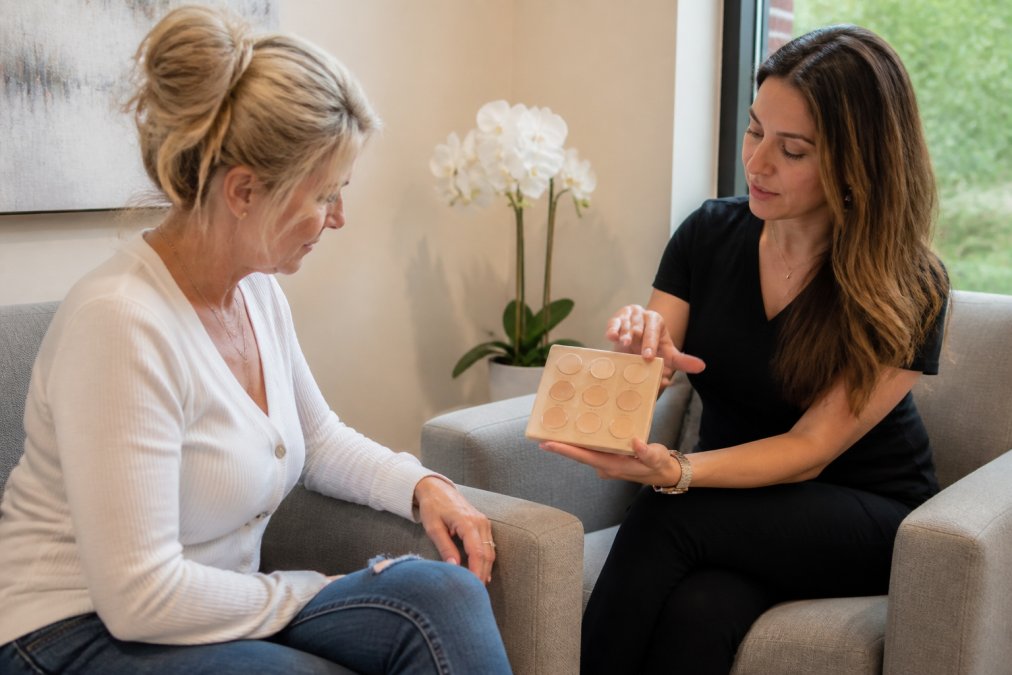
What Happens in the First Ten Minutes
Expect questions about your mastectomy or reconstruction, radiation, and how scars healed. Bring your surgical history if it’s written down.
Then the physical exam: tissue integrity, scar tissue, whether skin is ready. Still healing? You’ll likely be told to come back later.
How the Artist Assesses Your Skin
The artist checks your surrounding skin under neutral light, notes undertones, and how it responded to past trauma. Radiation and some oncology treatments change how skin holds pigment, which changes the plan.
A dermatological assessment isn’t always part of the visit, but a good artist knows when to refer you.
Choosing the Color and the Shape
You’ll look at pigment samples and talk color saturation. The goal isn’t a flat circle of brown, it’s the illusion of depth, built with shading, highlights, and a slightly irregular edge that reads as real.
The artist will talk symmetry with your remaining side, if you have one, and how placement follows the natural curve of the breast. Get involved, say what you want, and bring a pre-surgery photo if you can stand to look at it.
Ask to see the artist’s healed work, not just fresh tattoos. Fresh pigment looks vivid and impressive. What matters is how it settles at the eight-week mark, after the skin has done its thing.
Questions Worth Asking Before You Book
Come with a list. This is your one chance to interview the person working on a very personal part of your body.
- How many areola restorations have you completed?
- Can I see healed before-and-after photos?
- What’s your plan if the pigment doesn’t hold?
- How do you handle a touch-up, and is it included?
- What does aftercare look like for the first two weeks?
How to Prepare for the Consultation
Preparation is mostly practical and makes the appointment shorter.
- Bring your surgical history and records
- Skip caffeine for a few hours before
- Wear a comfortable top that’s easy to remove
- Bring pre-surgery photos if you have them
- Write your questions down
- Bring someone if you want a second set of ears
How Long It Takes and What It Costs
A thorough areola restoration consultation usually runs 30 to 60 minutes. Some artists offer it free, others apply a fee that goes toward the procedure. Ask upfront.
We won’t throw a number at you, because pricing depends on the scope of the work, how many sessions your skin needs, and whether you’re having one side or both done. Anyone quoting a flat figure before seeing your skin is guessing. Check with the studio directly.
Insurance and Financial Navigation
Some health insurance plans treat areola restoration after mastectomy as reconstructive care rather than cosmetic work. Others don’t. Call your insurer and ask whether micropigmentation following breast reconstruction is a covered benefit, and what documentation they need.
You’ll usually need a letter or referral from your surgeon or oncologist. Ask the studio what paperwork they can provide. Even when insurance won’t cover it, some clinics offer payment plans. Ask. The worst outcome is a no.
Do not assume your plan covers it, and do not assume it does not. Coverage for paramedical tattooing varies widely between plans, and the only authority on your policy is your insurer. Get it in writing before you commit.
The Emotional Side Nobody Warns You About
You may cry. Plenty of people do, and not always when you expect.
Seeing the area discussed out loud, in daylight, with a stranger, can bring up more than you anticipated. Relief and grief are both normal, and neither means you’re not ready.
If you can, schedule something gentle for afterward. Don’t rush back to work.
3D Nipple Tattoo Recovery Time and Follow-Up Sessions
Recovery from a 3D nipple tattoo is measured in weeks, not days, and the final result doesn’t appear until the skin settles. Most people return to normal activity the same day, with some soreness and peeling over the following week or two.
- Days 1 to 3: Darker and more saturated than the final result. Normal.
- Days 4 to 10: Peeling and flaking. Don’t pick, picking pulls pigment out with the skin.
- Weeks 2 to 4: Color fades as the top layer heals. Don’t panic; the pigment is settling into the dermis.
- Weeks 4 to 8: The true color emerges. Assess what you actually have.
A touch-up is standard, usually around the six to eight week mark. It’s not a sign something went wrong. Skin holds pigment unevenly, especially over scar tissue, and the second pass refines symmetry and density.
Post-Procedure Skincare Routine
What you do in the first two weeks affects how much pigment stays.
- Keep the area clean and dry for the first 24 to 48 hours
- Wash gently with a mild, fragrance-free cleanser
- Apply a thin layer of the aftercare ointment your artist recommends
- No pools, hot tubs, or long baths until healed
- No direct sun, and sunscreen once healed
- No scrubbing, exfoliating, or harsh actives
- Skip tight clothing that rubs the site
Areola Restoration Before and After: What the Process Actually Looks Like
The before-and-after is the part everyone wants to see, and the hardest to describe. A good restoration doesn’t look like a tattoo. It looks like the nipple-areola complex you remember, or close enough that you stop thinking about it.
Before: a smooth mound with flat, uniform color, no definition, and no landmark where the nipple should be.
After: a defined areola with a darker outer edge, a lighter center, and shading that creates the illusion of a raised nipple. Color is matched to your skin tone, not pulled from a chart.
The difference isn’t cosmetic in the small sense. It’s the difference between a breast that reads as reconstructed and one that reads as yours.
How to Choose a 3D Areola Artist
Credentials matter more here than in almost any other aesthetic service. You want a certified paramedical tattoo artist, not a general cosmetic tattooer who added areolas to the menu.
Ask about:
- Specific training in paramedical and areola work
- A portfolio of healed results, not just fresh ones
- Experience with scar tissue and radiated skin
- Whether they work alongside surgeons or oncology teams
- How they handle a result that doesn’t meet expectations
The right artist welcomes these questions. The wrong one gets defensive.
The single best predictor of a good result is not the pigment or the machine. It is the artist’s experience with scar tissue and their willingness to show you healed work.
Visualizing the Outcome
Before your consultation, spend ten minutes with a mirror and a pre-surgery photo if you have one. Note the size, position, and color of your original areola. Write it down and bring it.
No photo? Fine. The artist can work from your remaining side or reference images you choose together. What matters is going in with a sense of what you want, so you react to a proposal instead of starting from a blank page.
Some studios can show a mock-up or placement guide during the consultation. Ask.
Managing Expectations and Results
Realism is the goal, and realism has limits.
Pigment over scar tissue doesn’t always hold as evenly as over intact skin. Radiation changes texture and how skin takes color. Symmetry with a natural side is an approximation, not a mirror.
None of that means the result will be disappointing, it means it’ll be honest. A good artist tells you what your skin is likely to do, including the parts you don’t want to hear.
Take a photo of the area every week during healing. By week eight, you will have forgotten what week two looked like, and the photos are the fastest way to see that nothing has gone wrong.
Nipple Reconstruction vs. Tattooing
These are two different procedures, and plenty of people end up doing both.
Surgical nipple reconstruction builds a physical projection using your own tissue or a graft. It creates a raised shape, but color is still missing, so tattooing usually follows to add the areola and shading.
Tattooing alone creates the appearance of a nipple through pigment and shading, with no surgery and no added recovery. It suits people who don’t want another operation or whose surgeon advised against further surgery.
Ask your surgeon which option suits your reconstruction. Some types take a tattoo better than others.
| Approach | What It Creates | Recovery | Best For |
|---|---|---|---|
| Surgical reconstruction | Physical projection | Surgical recovery | Those wanting a raised nipple |
| 3D tattooing only | Visual depth and color | Days, not weeks | Those avoiding more surgery |
| Surgery plus tattooing | Projection and color | Surgical recovery plus tattoo healing | Those wanting the most complete result |
Follow-Up Adjustments
The follow-up isn’t optional, and not a sign of failure.
At the touch-up, the artist reviews how the pigment settled, adjusts saturation, adds density where it faded, and refines the edges. This is where symmetry gets tightened and highlights added back in.
Most people need one touch-up; some need two, particularly over scar tissue. After that the result is generally stable, though long-term fading happens gradually and some choose a refresh years later.
Why the Consultation Is the Whole Game
Everything that determines your result gets decided in that room: color, placement, the plan for scar tissue, and whether the artist is honest about what your skin will do.
You’ve heard enough promises. What you want is someone who’ll look at your skin, tell you the truth, and show you healed work to back it up.
If you’ve been putting off this appointment because you’re not sure you can handle another medical room, that hesitation is worth taking seriously, and worth moving past. GloVolution offers 3D Hyperrealism Areola Restoration with a personalized, strategy-based treatment plan built around your skin, your surgical history, and your timeline, alongside scar revision and camouflage for post-surgical scarring. Book an appointment with GloVolution and get a clear, honest picture of what your result can look like.
Frequently Asked Questions
How do I prepare for an areola restoration consultation?
Come with a list of questions and, if you have them, photos of your surgical results or previous nipple reconstruction work. Wear comfortable clothing that allows easy access to the chest area. If you had recent surgery, bring your surgeon’s clearance or note any restrictions. Avoid applying lotions or creams to the area the day of your appointment. Knowing your surgical history and any medications you take helps the artist plan a safe, realistic approach for your areola restoration consultation.
What questions should I ask during my 3D areola tattoo consultation?
Ask about the artist’s certifications in paramedical tattooing, how many areola procedures they perform regularly, and whether they have before-and-after photos you can review in person. Ask how they match pigment to your skin tone, what the touch-up process involves, and what results are realistic for your scar tissue or reconstructed nipple. Also ask about pricing structure, how many sessions are typically needed, and what aftercare looks like. A qualified artist welcomes every one of these questions.
Is 3D areola restoration considered a medical procedure?
It sits in a gray area. The tattooing itself is a cosmetic and paramedical service, but it is performed on tissue affected by breast surgery, mastectomy, or reconstruction. Many artists work alongside surgeons and oncologists, and some states require specific licensing or medical oversight for paramedical tattooing. Ask your artist what credentials they hold, whether they coordinate with your medical team, and what their protocol is if complications arise. Your surgeon’s input is always worth having before you book.
How long does a 3D areola restoration consultation usually take?
Most consultations run 30 to 60 minutes. That time covers a physical examination of the treatment area, a review of your surgical history and oncology treatments, skin tone matching, and a discussion of what realistic appearance and symmetry you can expect. Some artists also do a patch test during the same visit. If you have a lot of questions or complex scar tissue, plan for the longer end of that range so nothing feels rushed.