
Table of Contents
- What Areola Restoration Before and After Actually Shows
- Surgical Nipple Reconstruction vs. Tattooing: Which Path Makes Sense
- Areola Tattoo Healing Stages and What Your Skin Will Do
- Areola Micropigmentation Recovery: Aftercare That Actually Works
Last Updated: August 15, 2026
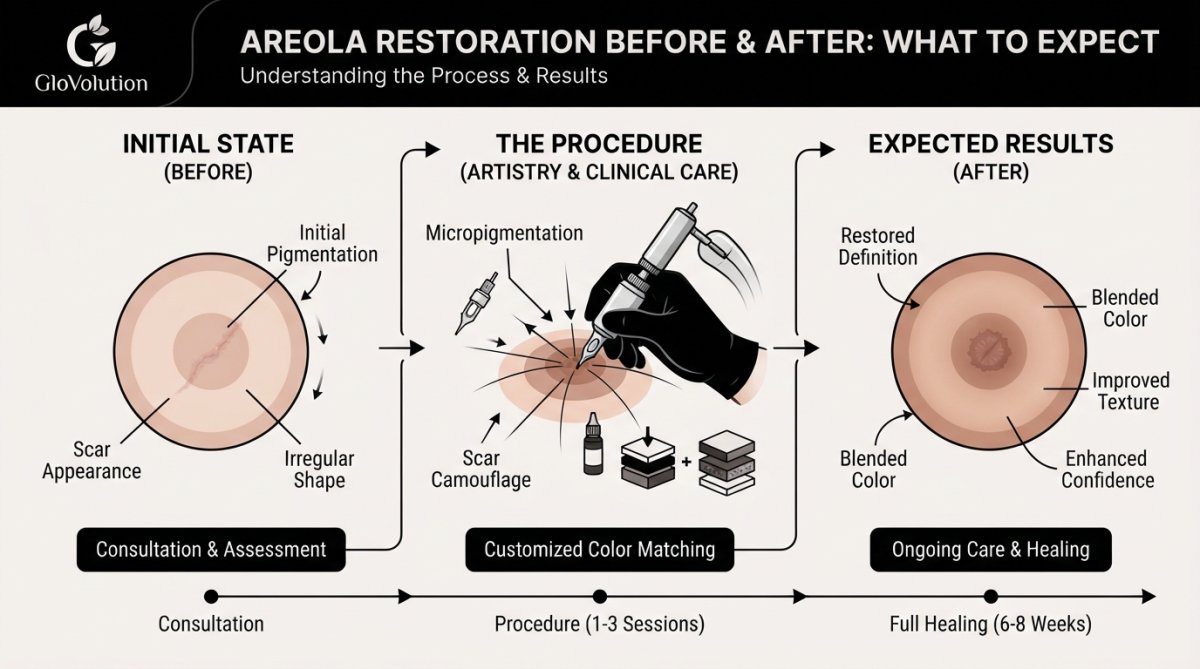
What Areola Restoration Before and After Actually Shows
Areola restoration before and after images show real transformations for people reclaiming confidence after surgery, weight loss, aging, or simply wanting to feel more like themselves. These aren’t just aesthetic changes, they’re about feeling at home in your body again. You see the rawness of what someone’s been through, then the restoration: pigmentation that matches skin tone, natural shape and dimension, results that look like you, not like you’ve had “work done.”
But most galleries skip the actual process between those two photos, the healing stages, the aftercare that determines success, the real conversation about what your skin will do during recovery.
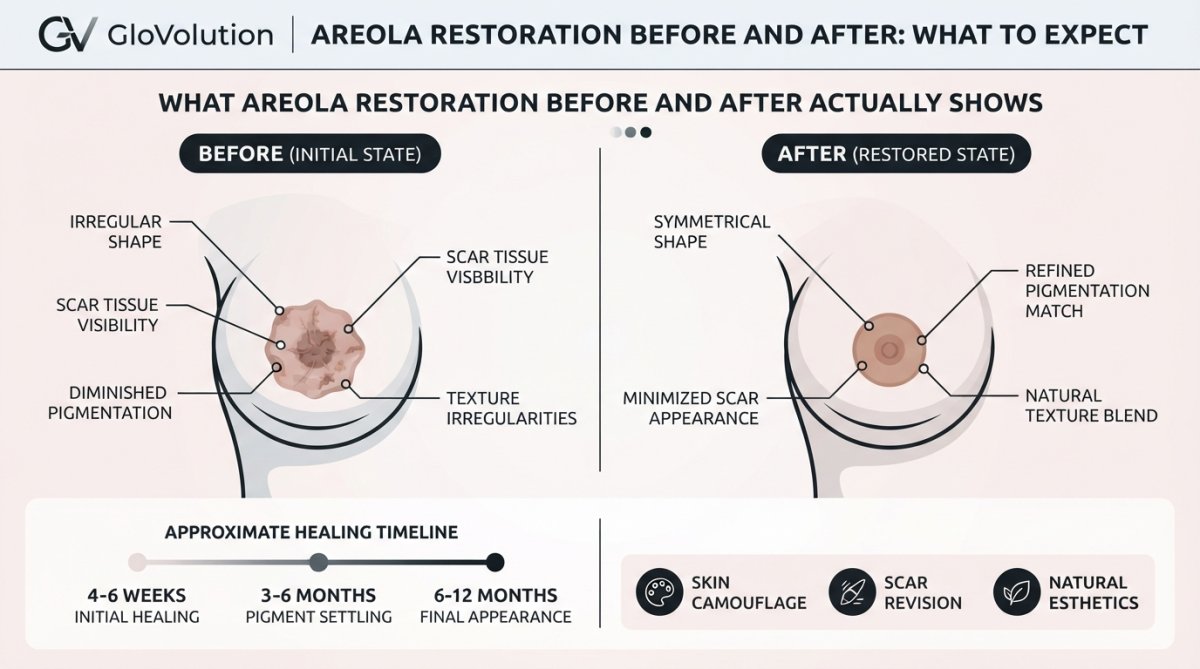
Surgical Nipple Reconstruction vs. Tattooing: Which Path Makes Sense
These two approaches aren’t interchangeable. Surgical nipple reconstruction uses tissue grafting to create actual nipple protrusion and areola tissue. It’s invasive, requires downtime, and involves real surgery. For breast cancer survivors who’ve had extensive reconstruction, this is often the choice made.
Medical tattooing, specifically 3D areola micropigmentation, works differently. It uses layered pigmentation to create optical illusion, depth, shadow, and highlight without surgical intervention. No grafts, no incisions, minimal recovery. A certified paramedical tattoo artist creates the appearance of three-dimensionality even though the surface is technically flat. When done right, it’s indistinguishable from natural areola.
The trade-off is simple: surgical reconstruction gives you actual tissue; tattooing gives you the visual result with minimal recovery. Your candidacy depends on your surgical history, skin condition, and what your body can handle.
Areola Tattoo Healing Stages and What Your Skin Will Do
Areola tattoo healing happens in distinct phases, and what occurs during each one determines whether you end up with perfect color match or uneven fading.
Week 1-2: The Fresh Stage
Your areola will look darker and more saturated than the final result, this is normal. Your skin is inflamed, making pigment appear more concentrated. You’ll see swelling, mild tenderness, and possibly slight oozing. During this phase, keeping the area clean, applying proper aftercare products, and avoiding water exposure aren’t suggestions, they’re the difference between a result that holds color and one that looks patchy in six months.
Week 3-4: The Peeling Phase
Your areola will start to peel as pigmented skin flakes off. This looks alarming if you don’t expect it, but it’s exactly what should happen. Your skin is shedding the damaged outer layer and revealing healed skin underneath with pigment integrated into the dermal layer. Don’t pick or scrub, let it peel naturally.
Week 5-8: The Settling Period
Most visible healing is done. Your areola looks closer to the final result, though color might seem slightly lighter than expected because inflammation has subsided. Some clients think they need a touch-up during this phase, but the pigment continues to settle for several more weeks. What looks light now often deepens slightly as skin fully heals. Your paramedical artist should actually provide a perfection session for you in case you actually do want a bit more pigment or dimension.
Areola Micropigmentation Recovery: Aftercare That Actually Works
Aftercare determines your result more than the procedure itself. You can have the most skilled artist in the world, but sloppy aftercare means uneven color retention and compromised outcomes.
The first week is critical. Your areola is an open wound at the cellular level. You’ll leave our spa with tegaderm. Typically that lasts 3-4 days. Once you take it off, you should keep your new areolas clean with unscented soap and water, nothing harsh or fragrant. Pat dry, don’t rub. Apply a thin layer of specialized healing ointment; over-moisturizing traps bacteria and causes complications.
Avoid baths, swimming, saunas, and submersion for at least two weeks. Showers are fine if you don’t direct water at the healing areola. Direct sunlight can fade pigment and cause inflammation. Wear loose, breathable clothing that doesn’t rub the area. Tight bras are the enemy during the first month.
Daily habits matter: sleeping position affects healing (back sleeping is better than side), sweating from exercise can introduce bacteria, and you should take it easy for the first week or two. The psychological part is real too, you’ll want to look constantly and compare obsessively to before-and-after images. This is normal. Most anxiety happens because you don’t know what normal healing looks like.
Areola restoration, whether through surgical nipple reconstruction or 3D areola micropigmentation, is deeply personal. The before-and-after images you see represent real transformations for people who wanted to feel confident in their skin again.
Understanding what those images represent and what happens in the weeks between procedure and final result helps you make the right choice for your body.
If you’re considering areola restoration and want to understand whether you’re a good candidate, GloVolution specializes in 3D hyperrealism areola restoration with a focus on natural-looking results and compassionate care. Book an appointment to discuss your specific situation and see what’s possible for you.
Frequently Asked Questions
Do reconstructed nipples and areolas look real?
3D hyperrealism areola restoration uses advanced micropigmentation techniques to create depth, shadow, and dimension that mimics natural nipple projection and areola texture. The results depend heavily on pigment matching to your skin tone and the artist's ability to create optical illusion through layering. Most people report feeling significantly more confident, though results look most natural when you're not examining them under magnification. The key is working with someone experienced in paramedical artistry who understands skin anatomy and healing.
How long does areola micropigmentation last?
Micropigmentation typically lasts 2 to 5 years before requiring a touch-up, though longevity depends on your skin type, sun exposure, and how well you follow aftercare instructions. Oily skin tends to fade faster than dry skin. Some pigment naturally lightens over time, which is why many clients schedule a refresh appointment after 2 to 3 years to maintain color vibrancy and definition. Your artist will discuss realistic expectations during your consultation.
What's the difference between surgical reconstruction and tattooing for areola restoration?
Surgical nipple reconstruction uses tissue grafts or implants to create physical projection and is typically done during breast reconstruction surgery. Areola tattooing (micropigmentation) deposits pigment into the dermal layer to create the appearance of a nipple and areola without surgical intervention. Tattooing is less invasive, requires no downtime, and works well for creating aesthetic definition. Surgery is better if you need actual nipple projection. Many breast cancer survivors choose tattooing because it's faster, less expensive, and pairs well with existing reconstruction.
What should I expect during areola tattoo healing stages?
Week 1: The area will be tender, slightly swollen, and darker than the final result. You'll see some light bleeding and oozing. Week 2-3: Scabbing begins; resist the urge to pick or scratch. The color may look patchy. Weeks 3-6: Scabs shed and color lightens significantly, sometimes looking too light or uneven. This is normal. By week 6-8, the final color emerges as swelling subsides and pigment settles. Full healing takes 6 to 8 weeks, and you'll see the true result after that timeline.
This article was written using GrandRanker