
Table of Contents
- What Counts as a Paramedical Tattoo Alternative
- Scar Revision Treatment Options Beyond Ink
- How to Choose a Restorative Skin Specialist
- Medical Camouflage vs Paramedical Tattoo: What’s the Difference
- Who Should Look Beyond Tattooing Entirely
- Matching the Right Option to Your Situation
- Red Flags When Vetting a Restorative Specialist
- Frequently Asked Questions
Last Updated: September 15, 2026
What Counts as a Paramedical Tattoo Alternative
When ink isn’t the answer, the best paramedical tattoo artist alternatives come down to clinical skin revision, surgical correction, and medical camouflage by licensed practitioners. Most guides treat “paramedical tattoo” and “scar revision” as the same thing, they’re not.
Scar Revision Treatment Options Beyond Ink
Scar revision treatment options fall into three buckets: clinical resurfacing (microneedling, laser, peels) for texture, surgical revision for raised or tethered scars, and medical camouflage for color loss like areola restoration.
| Option | Best For | Sessions | Downtime |
|---|---|---|---|
| Microneedling | Texture, pitted acne scars | 3-6 | 1-3 days |
| Laser resurfacing | Tone and surface irregularity | 1-3 | 3-7 days |
| Medical camouflage | Color loss, areola restoration | 2-3 | 5-10 days |
Booking camouflage before your scar has fully matured is a common, expensive mistake. Pigment placed into a still-remodeling scar can migrate or fade unevenly.
How to Choose a Restorative Skin Specialist
Choosing a restorative skin specialist means checking credentials, seeing real work on skin like yours, and asking hard questions about aftercare before you book. Ask which license they operate under, then request unedited daylight photos on skin tones like yours.
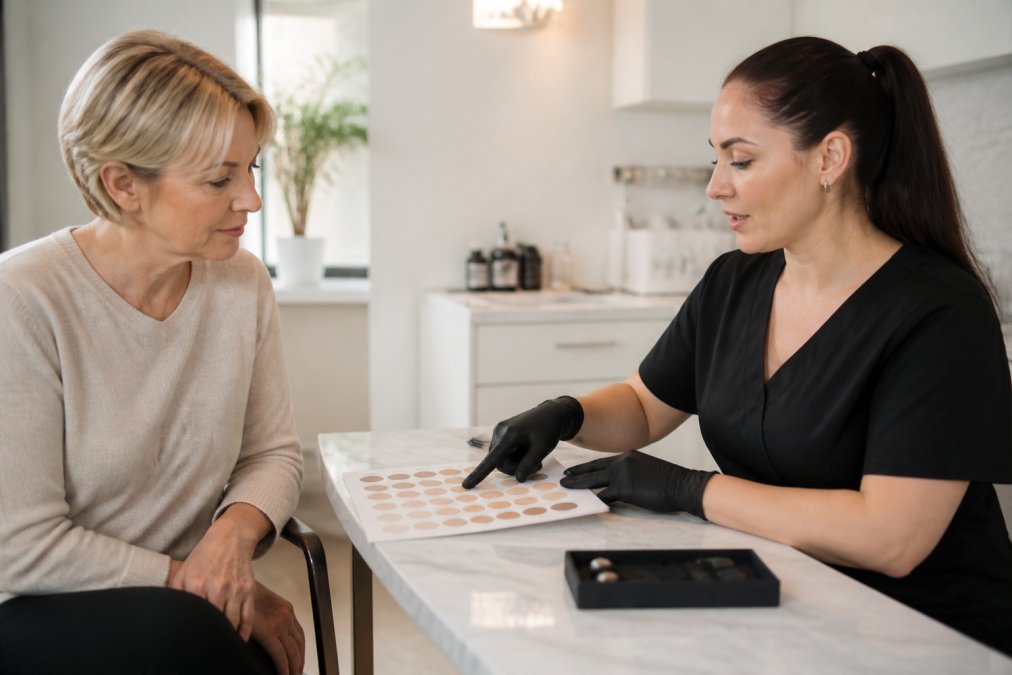
Before you put down a deposit, check:
- Current license and proof of insurance
- Training specific to scar or areola work, not general tattooing
- Unedited before-and-afters on your skin tone
- A patch test offered before full treatment
- Written aftercare protocol you take home
Ask what happens if the result isn’t right. A practitioner with a written touch-up policy knows pigment doesn’t always land as planned.
Medical Camouflage vs Paramedical Tattoo: What’s the Difference
Medical camouflage vs paramedical tattoo is mostly a question of intent. Both use pigment; medical camouflage is done with a clinical goal, restoring lost color or blending a scar, while paramedical tattooing is the broader term. A certified paramedical artist matches pigment to your surrounding skin, not a color chart, and accounts for how it settles over weeks.
Who Should Look Beyond Tattooing Entirely
Some scars shouldn’t be tattooed at all, and a good specialist will tell you that in the first ten minutes. Active keloids are the clearest example, plus scars still red, raised, or changing, and active infections. Certain medications, bleeding disorders, or poor wound healing belong in the consultation, not the fine print.
The right specialist turns people away. If nobody has ever told you no during a consultation, you’re probably not talking to someone with the clinical background for restorative work.
Long-term maintenance is the other thing nobody mentions upfront. Pigment fades, scar tissue changes, and most restorative work needs a touch-up eventually.
Matching the Right Option to Your Situation
Different histories point to different starting points:
- Post-surgical scarring, color loss: medical camouflage first
- Acne scarring, texture: clinical resurfacing before any pigment
- Raised or tethered scars: surgical consult first, camouflage later if needed
- Areola restoration: 3D hyperrealism by a certified paramedical artist
At GloVolution, the approach starts with a strategy-based treatment plan rather than a single procedure. Treatments like Scar Revision & Camouflage and 3D Hyperrealism Areola Restoration are built around that sequencing, with a focus on natural-looking results and long-term restoration rather than a quick fix. Weighing surgical options against clinical ones? That’s a conversation with a physician, not a studio.
Red Flags When Vetting a Restorative Specialist
The fastest way to spot a problem is to listen for guarantees. Skin heals on its own schedule. Anyone promising a specific outcome or “permanent” results isn’t being straight with you.
- No patch test offered
- Pressure to book and pay the same day
- Before-and-afters that look filtered or are all one skin tone
- No explanation of what happens if pigment doesn’t take
- A studio that can’t tell you how it sterilizes equipment
Ask directly about autoclave use and single-use needles. A sterile environment is a process, not a vibe.
A patch test is not optional, and skipping it to save a week is how people end up with a reaction in a very visible place. Ask for it, and wait the full recommended window.
Frequently Asked Questions
What are the non-tattoo alternatives for scar camouflage?
Several options exist beyond paramedical tattooing. Microneedling, laser therapy, and chemical peels can improve skin texture and tone over multiple sessions. Each approach has different downtime and longevity, so a consultation with a qualified restorative skin specialist helps determine what suits your skin and goals.
How do clinical skin restoration treatments compare to paramedical tattooing?
Paramedical tattooing deposits medical-grade pigments into the dermal layer to match skin tone or rebuild the nipple-areola complex. Clinical restoration treatments like microneedling, Rezenerate, or facial peels focus on stimulating collagen and improving skin texture rather than adding color. They are often complementary: a specialist might recommend collagen-building sessions before or after pigment work to support pigment retention and overall skin health. The right combination depends on whether your primary concern is color loss, texture, or both.
How do I know if my skin is a candidate for restorative tattooing?
Candidacy depends on scar maturity, skin type, and overall health. Most artists wait until a scar is at least six to twelve months old and fully healed before tattooing over it. Active infections, certain autoimmune conditions, and a history of keloid scarring may rule out the procedure. A consultation with a certified paramedical tattoo artist is a standard first step. They will assess skin texture, pigment retention potential, and whether a medical camouflage approach might serve you better.