
Table of Contents
- Scar Revision vs Plastic Surgery: What Actually Differs
- Laser Scar Revision vs Surgery: A Practical Comparison
- Non-Surgical Scar Treatment Options Worth Knowing
- Surgical Scar Revision Recovery Time and Long-Term Care
Last Updated: August 13, 2026
Scar Revision vs Plastic Surgery: What Actually Differs
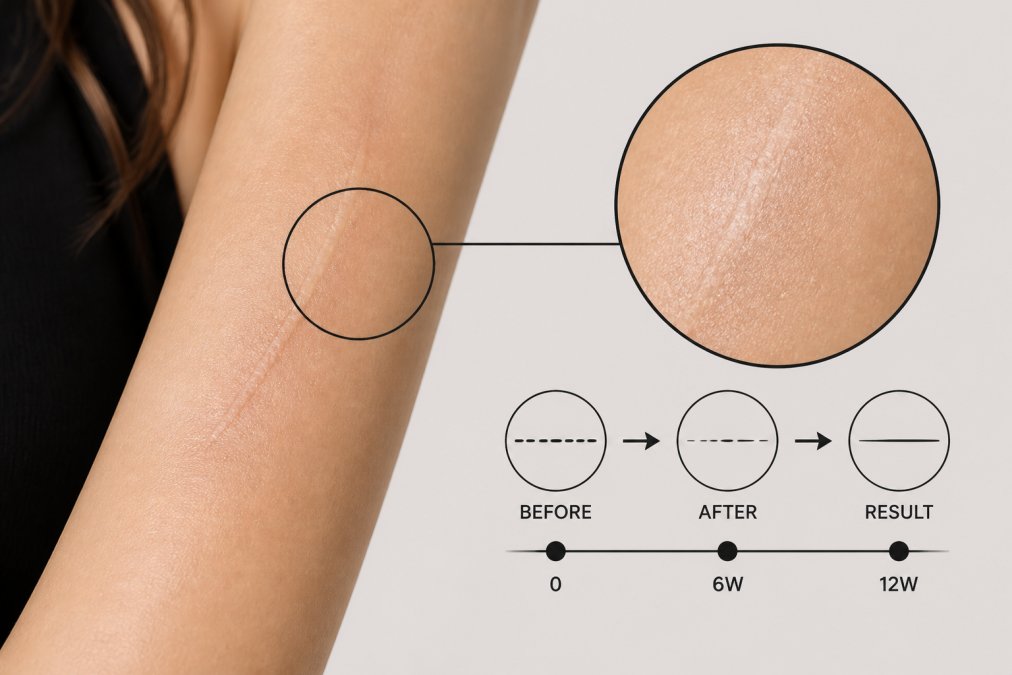
Scar revision and plastic surgery get lumped together constantly, but they’re genuinely different. Scar revision is a targeted intervention focused specifically on improving the appearance or function of an existing scar, softening raised scars, reducing pigmentation, releasing contractures, or camouflaging atrophic scars. Plastic surgery encompasses reconstructive procedures and cosmetic improvement across the entire body. Scar work is one piece of a much larger scope of practice.
The practical difference: plastic surgery typically involves surgical excision, general or local anesthesia, significant downtime, and recovery measured in weeks. Scar revision can range from non-invasive topical treatments to minimally invasive procedures, with far less disruption to your daily life.
|
Approach |
Primary Goal |
Typical Techniques |
Downtime |
|---|---|---|---|
|
Scar Revision |
Improve scar appearance/function |
Laser, fillers, camouflage, excision |
Minimal to moderate |
|
Plastic Surgery (reconstructive) |
Restore form and function post-injury or surgery |
Surgical excision, tissue expansion, flap repair |
Moderate to significant |
|
Paramedical Artistry |
Camouflage and visual restoration |
Pigment work, collagen stimulation |
Minimal |
The right path depends on your scar type. Keloid scars grow beyond the original wound boundary and need different protocols than atrophic scars, which sit below the skin surface. Contracture scars affecting movement may require surgical intervention.
Laser Scar Revision vs Surgery: A Practical Comparison
Laser scar revision is not surgery, and treating it like a lesser version misses the point entirely.
Laser resurfacing, including fractional laser and CO2 laser options, works by removing damaged skin layers and stimulating collagen production beneath. According to UCLA Health’s plastic surgery and scar treatment overview, laser-based approaches can reduce redness, smooth texture, and flatten raised scars across surgical scars, burn scars, and acne scarring. Multiple sessions are typically required, with results varying by skin tone, scar depth, and individual healing response.
Surgical excision physically removes scar tissue and closes the wound with suturing designed to minimize the new scar’s visibility. It’s the more aggressive option, appropriate for scars that are wide, deeply pigmented, or structurally problematic in ways laser can’t address. Surgery doesn’t eliminate a scar, it replaces it with a new one, ideally much less noticeable.
Where laser wins:
- Discoloration and uneven pigmentation
- Textural irregularities
- Mild to moderate hypertrophic scars
- Post-surgical scars past initial healing
Where surgical excision wins:
- Contracture scars causing functional impairment
- Very wide or structurally irregular scars
- Keloid scars combined with steroid injection protocols
- Scars requiring tissue repositioning
Many patients use both at different stages. Laser resurfacing often follows surgical revision once the wound has healed enough to tolerate it.
Non-Surgical Scar Treatment Options Worth Knowing
The non-surgical category is broader than most expect, and it’s where the majority of scar management happens.
Silicone gel sheeting is the most evidence-backed at-home option. Products like ScarAway and NewGel+ work by hydrating scar tissue and applying gentle pressure, helping flatten and fade hypertrophic and keloid scars over time. As documented in American Academy of Dermatology guidance on scar treatment, silicone gel has consistent clinical support. The catch: you need to wear them for hours daily, for weeks or months.
Dermal fillers address atrophic scars by adding volume beneath the skin to bring it level with surrounding tissue. Topical treatments, including retinoids and prescription formulations, support scar maturation and improve pigmentation over time. Sun protection is non-negotiable; UV exposure worsens discoloration and sets back progress.
Paramedical tattooing and scar camouflage use pigment to visually integrate the scar with surrounding skin tone and texture. For breast cancer survivors dealing with post-mastectomy scarring or anyone with visible scars unresponsive to structural treatments, this approach can be genuinely transformative.
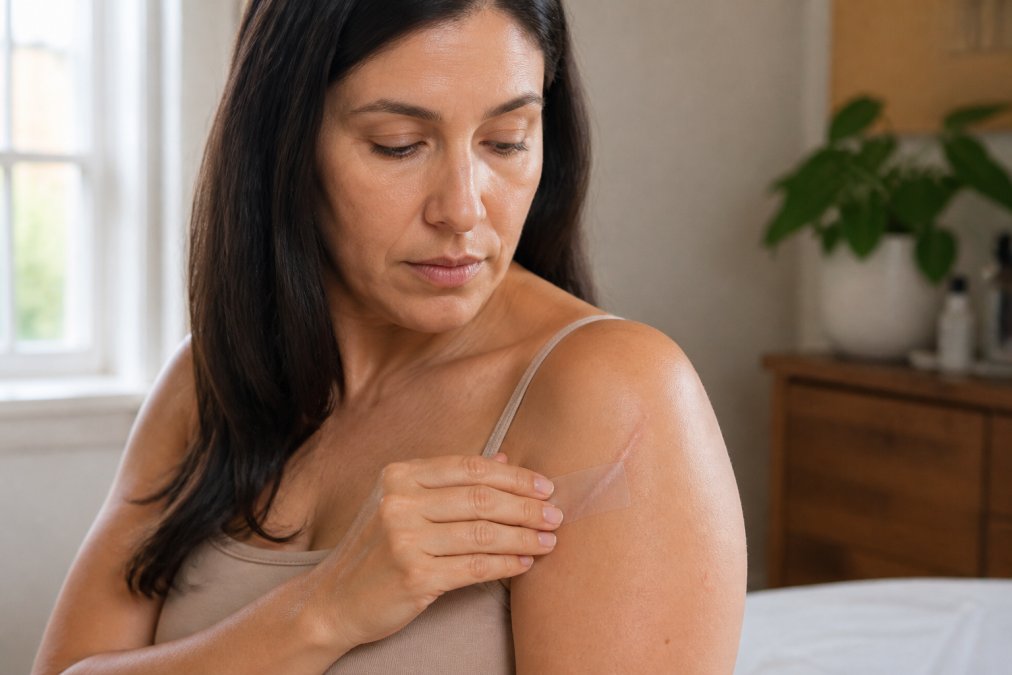
The psychological dimension of scar management deserves attention. Many women dealing with visible scarring carry real emotional weight around it. The decision to pursue treatment is often about feeling at home in your own body again.
Surgical Scar Revision Recovery Time and Long-Term Care
Surgical scar revision recovery varies by procedure complexity, location, and individual healing, but most patients expect several weeks before the area fully settles.
The first two weeks involve keeping the incision clean, managing swelling, and avoiding tension on the wound. Sutures are usually removed within one to two weeks. According to American Society of Plastic Surgeons patient resources on scar revision, full scar maturation after surgical revision can take up to a year or more. What you see at six weeks is not the final result.
Long-term maintenance follows a consistent framework:
- Silicone gel or sheeting applied daily for several months post-procedure
- Sun protection on the treated area, ideally SPF 30 or higher
- Massage of healed scar tissue to soften and improve texture
- Avoiding smoking, which impairs wound healing and collagen remodeling
- Follow-up appointments to monitor progress and adjust the plan
The follow-through on daily silicone use and sun protection is where many people fall off. The quality of the final result is directly tied to how well post-operative care is managed.
For paramedical scar camouflage, long-term care centers on skin health rather than wound management. Keeping skin hydrated, protected from sun, and supported with collagen-stimulating treatments like Rezenerate preserves the visual result.
The cost-benefit calculation is genuinely personal. Surgical revision carries higher upfront investment, more downtime, and longer recovery. Non-surgical and paramedical approaches typically involve lower individual session costs but may require multiple treatments over time. Neither path is inherently better; the right choice depends on scar type, your goals, timeline, and how much disruption you can realistically absorb.
Deciding between scar revision and plastic surgery often involves layering approaches over time rather than picking one exclusively. Scar Revision & Camouflage services are built around personalized, strategy-based planning, with a focus on collagen stimulation, clinical-grade precision, and treatments customized to your skin’s specific needs. If you’re ready to stop guessing and start with a real plan, book an appointment and we’ll figure out what actually makes sense for your scars.
Frequently Asked Questions
Is scar revision considered a form of plastic surgery?
Technically, yes — surgical scar revision falls under the plastic and reconstructive surgery umbrella. But the goal is narrower: improving a specific scar's appearance or function rather than reshaping a body area. A board-certified plastic surgeon or dermatologist typically performs the procedure. Paramedical approaches like scar camouflage tattooing sit outside surgical medicine entirely and focus on visual correction through pigment and skin texture work, with no incision involved.
What are the disadvantages of scar revision surgery?
Surgical scar revision carries real trade-offs. You're trading one scar for another — the goal is a less noticeable one, not zero scar. Risks include infection, poor wound healing, pigmentation changes, and the possibility that the new scar hypertrophies or keloids, especially in skin tones prone to that response. Recovery takes weeks, and results aren't guaranteed. For some scar types, non-surgical scar treatment options like laser resurfacing or paramedical camouflage deliver meaningful improvement with far less downtime.
How long does surgical scar revision recovery actually take?
Surgical scar revision recovery time varies by technique. Simple excision with suturing typically means one to two weeks of restricted activity, with sutures out around day seven to fourteen. Full scar maturation — when you can accurately judge the final result — takes six to eighteen months. Laser-based approaches generally involve less downtime, often just days of redness and peeling. Your provider will give you a post-operative care plan that includes sun protection and possibly topical treatments like silicone gel to support healing.
Are scar revisions worth it?
For many people, yes — but the answer depends on the scar type, location, and what's driving the decision. Functional impairment from contracture scarring, for example, makes revision clearly worthwhile. For cosmetic concerns, patient satisfaction data generally skews positive when expectations are realistic going in. The psychological impact of a visible scar is real, and improving its appearance can genuinely shift how someone feels in their skin. A thorough consultation helps set honest expectations before committing to any path.
What non-surgical options should I try before considering surgery?
Several non-surgical scar treatment options are worth trying first, especially for hypertrophic scars and atrophic scars. Medical-grade silicone gel sheets worn consistently can flatten and fade raised scars over months. Laser resurfacing improves skin texture, pigmentation, and collagen structure without excision. Dermal fillers can temporarily raise depressed scars. Paramedical scar camouflage uses pigment to visually minimize scars without any surgical risk. Your dermatology provider can help match the right approach to your specific scar.
This article was written using GrandRanker