
Table of Contents
- Why Scar Restoration Alternatives Matter
- Paramedical Tattooing for Scars: A Different Approach
- Restorative Tattooing Recovery Time and What to Expect
- Best Practices for Scar Aftercare and Long-Term Results
- Frequently Asked Questions
Last Updated: September 1, 2026
Why Scar Restoration Alternatives Matter
When you’ve dealt with scars for years, surgery, injury, acne, weight loss, you know topical creams and time alone don’t cut it. Scars aren’t all the same problem. A flat, pale surgical scar sits in an entirely different category than raised acne scarring or post-burn texture damage. That’s why one-size-fits-all approaches, whether drugstore products or generic laser treatments, often disappoint.
Scar restoration has evolved beyond basic creams and needles. Today you can choose specialized tattooing techniques that camouflage scars at the skin level, clinical-grade laser treatments that rebuild collagen, and targeted topical protocols for long-term results. The question isn’t whether restoration is possible, it’s which approach aligns with your scar type, skin, timeline, and budget.
Paramedical Tattooing for Scars: A Different Approach
Paramedical tattooing, or scar camouflage tattooing, works on a principle most people don’t expect: instead of erasing the scar, you blend it. A trained artist deposits custom-matched pigment directly into scar tissue, creating the visual illusion that the scarred area matches surrounding skin tone and texture.
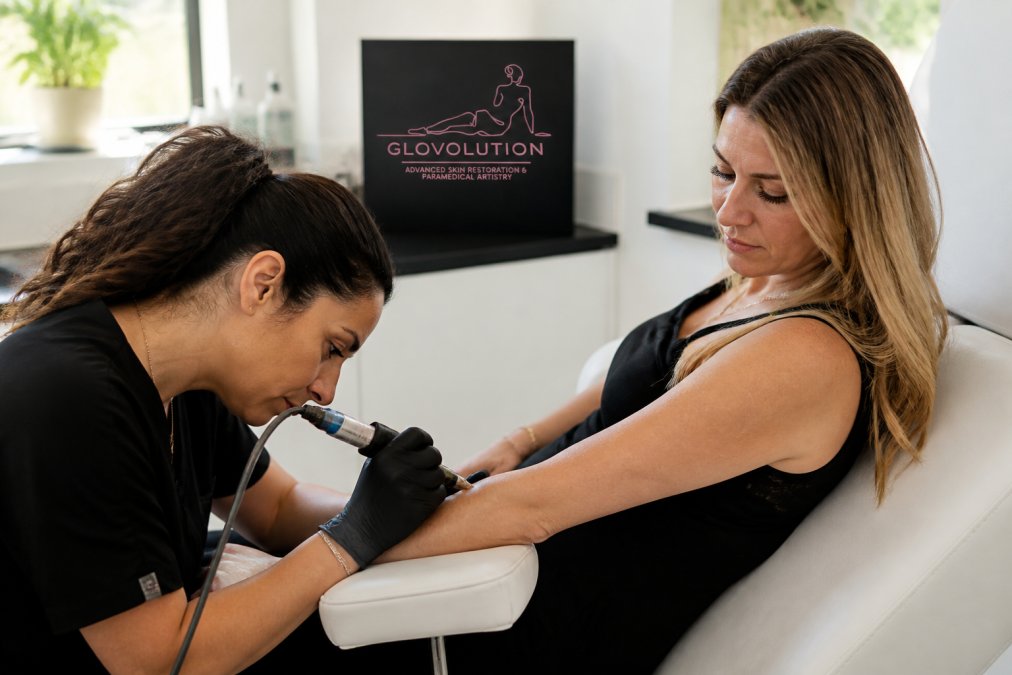
This works best on scars that are fully mature (12-24 months old), flat or slightly depressed, and lighter than surrounding skin. For old surgical scars, stretch marks, or stable pale post-injury scarring, it can be surprisingly effective.
The real advantage: it’s non-invasive. No needling, no laser ablation, no downtime beyond mild redness. You sit for 2-4 hours depending on scar size and walk out. Pigment settles over weeks, with final results within a month. One honest limitation: results aren’t permanent. Pigment fades over 3-5 years before touch-ups are needed.
Restorative Tattooing Recovery Time and What to Expect
Recovery from paramedical tattooing is genuinely minimal. The first 48 hours bring mild redness and slight swelling. For the first week, expect tenderness and darker appearance as the skin is still inflamed. Avoid direct sunlight, swimming, and intense workouts. Keep the area clean and follow your artist’s aftercare protocol.
By week two, any scab sheds and pigment begins settling into true tone. Most artists schedule a touch-up around week four if adjustments are needed. Full maturation takes about six weeks. Compare that to laser resurfacing (weeks of peeling and redness) or surgical revision (stitches and wound care). Paramedical tattooing is a low-friction option if your scar qualifies.
Best Practices for Scar Aftercare and Long-Term Results
Whether you choose tattooing, laser, or clinical topical protocol, aftercare determines whether results hold or fade.
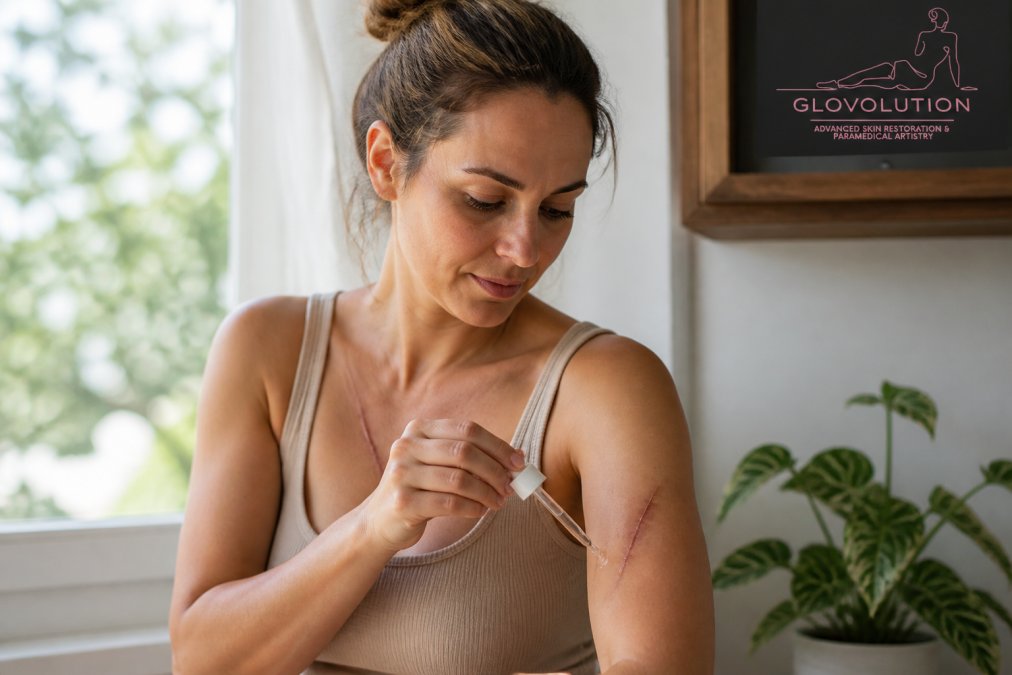
Sun protection is non-negotiable. New scar tissue is hypersensitive to UV exposure. Use SPF 30 minimum, reapply every two hours outdoors, and consider physical barriers like clothing during the first three months.
Hydration and barrier support matter. Healing scar tissue loses water faster than normal skin. A good moisturizer with silicone-based ingredients or ceramics seals the barrier. Apply twice daily for the first month, then maintain indefinitely.
Avoid harsh actives during healing. Retinoids, acids, and vitamin C serums can irritate fresh scar tissue. Wait at least four weeks before reintroducing actives, then introduce slowly.
Consider silicone-based treatments for ongoing support. Products like BIOCORNEUM combine medical-grade silicone with SPF 30, hydrate scar tissue, protect from sun, and help flatten raised scars over time.
Schedule realistic follow-ups. Plan for a touch-up around week four for paramedical tattooing, or 2-3 laser sessions spaced 4-6 weeks apart. One-and-done treatments rarely deliver the depth of results that staged approaches do. For deeper skin renewal between scar treatments, clinical options like Rezenerate or Facial Peels can support overall skin texture and tone.
Scar restoration takes strategy, not just hope. Whether you’re considering paramedical tattooing, laser resurfacing, or a clinical topical approach, the right choice depends on your scar type, skin tone, and what your life realistically allows. GloVolution specializes in personalized Scar Revision & Camouflage with certified paramedical artistry and clinical-grade protocols designed for long-term skin restoration. Book An Appointment to discuss which restoration approach aligns with your specific needs and goals.
Frequently Asked Questions
How does paramedical tattooing for scars differ from laser scar revision?
Paramedical tattooing deposits custom-matched pigments directly into scar tissue to blend it with surrounding skin, while laser treatments use energy to stimulate collagen remodeling and resurface the skin. Tattooing works best on flat, healed scars and doesn’t remove tissue, whereas laser can improve texture and depth. Choose tattooing for visibility reduction on mature scars; choose laser for active collagen stimulation and texture improvement.
What is the restorative tattooing recovery time, and when can I see results?
Most restorative tattooing heals within 7-14 days, though full pigment settling takes 4-6 weeks. You’ll see immediate camouflage, but the final appearance emerges as swelling subsides and pigment stabilizes. Many clients need a touch-up session 4-8 weeks after the initial treatment to refine color match and coverage. Plan for minimal downtime but expect some redness and slight tenderness for the first few days.
What are the best practices for scar aftercare to ensure lasting restoration results?
Keep the treated area clean and dry for the first 24 hours, avoid direct sunlight and chlorine for at least two weeks, and use a fragrance-free moisturizer to support skin barrier restoration. Apply SPF 30+ daily to prevent pigment fading and discoloration. Avoid picking, scratching, or applying makeup over the area during healing. Follow your specialist’s specific aftercare protocol, and attend any recommended follow-up sessions for optimal, long-lasting results.
This article was written using GrandRanker