
Table of Contents
- 1. Laser and Light-Based Therapies for Sun-Damaged Décolletage
- 2. Microneedling and PRF: Collagen Induction for Crepey Chest Skin
- 3. Clinical Skincare for Aging Skin: Retinoids, Peels, and Topicals
- Preventing Further Sun Damage on the Chest
- Frequently Asked Questions
Last Updated: September 13, 2026
1. Laser and Light-Based Therapies for Sun-Damaged Décolletage
A sun damaged decolletage is chest skin that’s taken decades of UV without the SPF you now know better than to skip, hyperpigmentation, crepey texture, and broken capillaries show up here long before your face.
For pigment and redness, intense pulsed light and gentle fractionated lasers like Moxi are common starting points. For crepey texture and lost elasticity, Ultherapy uses micro-focused ultrasound to lift and tighten, and it’s FDA-cleared for the décolletage.
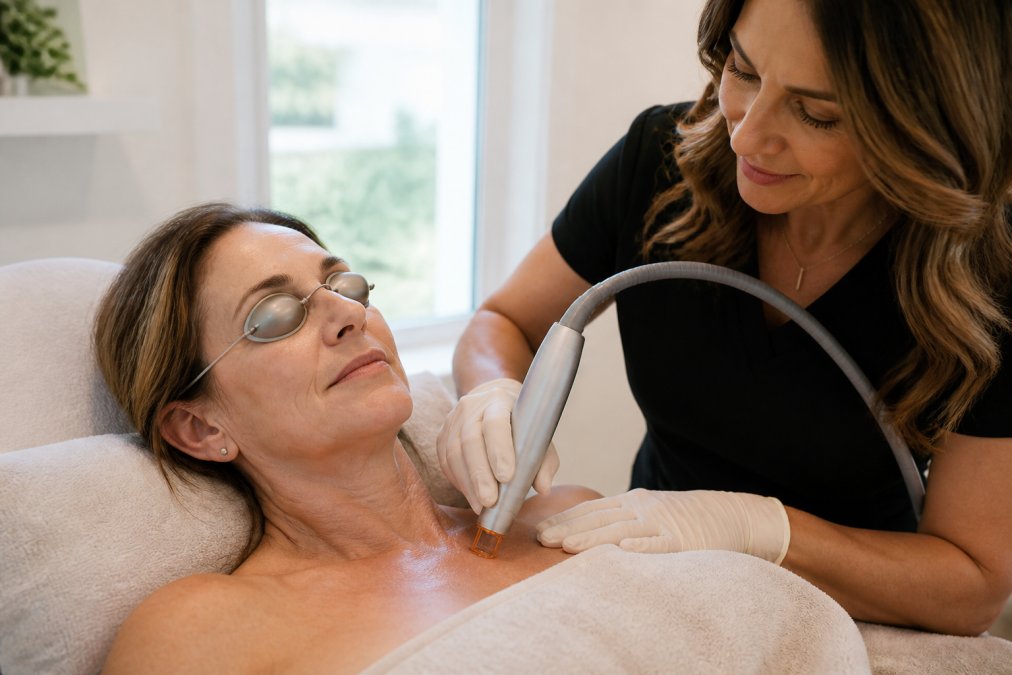
Not everyone’s a candidate. Ultherapy results develop over months, not days.
Ask for a test spot on a small area and wait two weeks before committing to a full series. Chest skin is thinner than facial skin and heals differently, so a reaction you would shrug off on your cheek can linger here.
| Therapy | Best For | Downtime | Results Timeline |
|---|---|---|---|
| Intense-pulsed light | Pigment and redness | Minimal | Weeks, series needed |
| Moxi laser | Early photoaging | Very low | Gradual, weeks |
| Ultherapy | Laxity and sagging | None | Months |
2. Microneedling and PRF: Collagen Induction for Crepey Chest Skin
Microneedling uses fine needles to create controlled micro-injuries, triggering your own collagen induction response, on the chest, that means thicker skin, better elasticity, and a smoother surface. GloVolution offers Nanoinfusion Facial and Rezenerate, which are advanced facial treatments that utilize similar principles for skin restoration.
Recovery is short: redness for a day or two, and skip actives and sun for about a week. Most people need a series, with maintenance every few months.
Do not layer microneedling with strong acids or tretinoin in the same week. The skin barrier is open after needling, and applying a chemical peel too soon can cause burns and set your progress back by months.
3. Clinical Skincare for Aging Skin: Retinoids, Peels, and Topicals
Clinical skincare for aging skin is the at-home half of the equation, skip it and your in-clinic results fade within months. Tretinoin accelerates cellular turnover and supports collagen, making it the workhorse for texture and tone; start slow, it can irritate.
Chemical peels exfoliate damaged cells and stimulate epidermal renewal, a professional Facial Peels series can be a good way to reset a dull, sun-weathered chest between other treatments. Hydroquinone is still one of the most effective lighteners for stubborn dark spots, though it needs medical supervision long-term, and azelaic acid is a gentler alternative for pigment and redness. Antioxidants, especially vitamin C, support the barrier, but none of it replaces broad-spectrum sunscreen, which is non-negotiable on the chest.
The single most important thing you can do for a sun damaged decolletage is wear broad-spectrum sunscreen on it every single day, reapplied. Every treatment on this list works better and lasts longer when you stop adding new damage.
Preventing Further Sun Damage on the Chest
Preventing further sun damage on the chest comes down to three habits you already know but rarely apply below the collarbone: broad-spectrum sunscreen with a high SPF, reapplied; protective clothing with a real weave; and dodging peak UV hours when you can.
The chest is the most-forgotten real estate on the body, you moisturize your face, cover your shoulders, and the décolletage sits exposed in almost every neckline you own.
For long-term maintenance, think in seasons, not one-off fixes:
- Daily: broad-spectrum sunscreen and an antioxidant serum
- Evenings: a retinoid two to four nights a week
- Every few months: a professional treatment
- Annually: a dermatologist skin check
At GloVolution, treatment planning starts with an honest look at your skin’s history and your goals, then builds a strategy around collagen stimulation rather than quick surface fixes. Our team works with mature, hormonally shifting skin and understands that the chest, like the rest of you, has a story. If you want a plan that accounts for yours, the American Academy of Dermatology’s guidance on sun protection is a solid place to start reading before you book anything.
Frequently Asked Questions
What is the most effective treatment for sun damage on the chest?
There is no single winner. For pigment and redness, gentle fractionated lasers like Moxi are common starting points. For crepey texture and lost elasticity, microneedling or Ultherapy may be recommended. The right pick depends on your skin tone, how deep the damage goes, and your downtime tolerance, so a consultation is the honest first step.
Can professional skin restoration treatments actually reverse sun damage?
They can improve tone, texture, and pigmentation, and collagen induction can thicken thinning skin over time. What they cannot do is erase decades of ultraviolet radiation in one session. Most plans combine in-office treatments with clinical skincare for aging skin at home, and results build across months. Think restoration, not rewinding the clock.
How long do restorative décolletage treatments typically last?
It varies by treatment. Laser results can hold for months to a year with sun protection and home care. Microneedling often needs a series, then maintenance every six to twelve months. Ultherapy results develop gradually and can last up to a year or more for some people. Your recovery time for skin restoration treatments and long-term upkeep matter as much as the procedure itself.
How do you prevent further sun damage on the chest?
Broad-spectrum sunscreen with SPF 30 or higher, reapplied every two hours when you are outside, is the baseline. Clothing with a tight weave, UV-protective wraps, and shade during peak hours do real work too. Add antioxidants in the morning and retinoids at night once your skin tolerates them. Preventing further sun damage on the chest is what keeps your treatment results from fading.
Your chest skin has been through a lot, and it deserves a plan that treats it with the same care as your face. GloVolution offers personalized, strategy-based treatment planning built around restorative care, including advanced facial treatments, scar revision and camouflage, and clinical-grade protocols designed to minimize downtime while supporting long-term skin health. Book an appointment with GloVolution and start building a routine that actually holds up over time.