
Table of Contents
- Restorative Ink vs Local Clinics: Key Differences
- Areola Restoration Recovery Timeline: What to Expect
- Scar Camouflage Consultation Questions to Ask
- Frequently Asked Questions
Last Updated: September 9, 2026
Deciding between Restorative Ink and local paramedical clinics comes down to one question: do you want a training provider, or a practitioner who will perform your procedure? Restorative Ink is a training academy, not a clinic. For treatment, a certified local artist like those at GloVolution offers the hands-on, personalized care a curriculum-based organization cannot provide.
Restorative tattooing implants medical-grade pigments into compromised tissue to restore natural appearance after surgery, injury, or skin changes. This guide from GloVolution explains the practical differences between a training entity and a local clinical artist.
Restorative Ink vs Local Clinics: Key Differences
Restorative Ink sells education; local paramedical clinics sell treatment. If you are an artist looking to master color theory and pigment formulation, their accredited restorative tattoo training programs serve that purpose well. But as a patient, you cannot book an appointment for your own scar revision.
A local certified paramedical artist brings individualized assessment. They evaluate your skin integrity, medical history, and tissue healing capacity in person, because restorative cosmetic tattooing requires a customized pigment blend for your skin tone and texture. Many local studios also offer complementary services like Scar Revision & Camouflage to address multiple concerns in one visit.
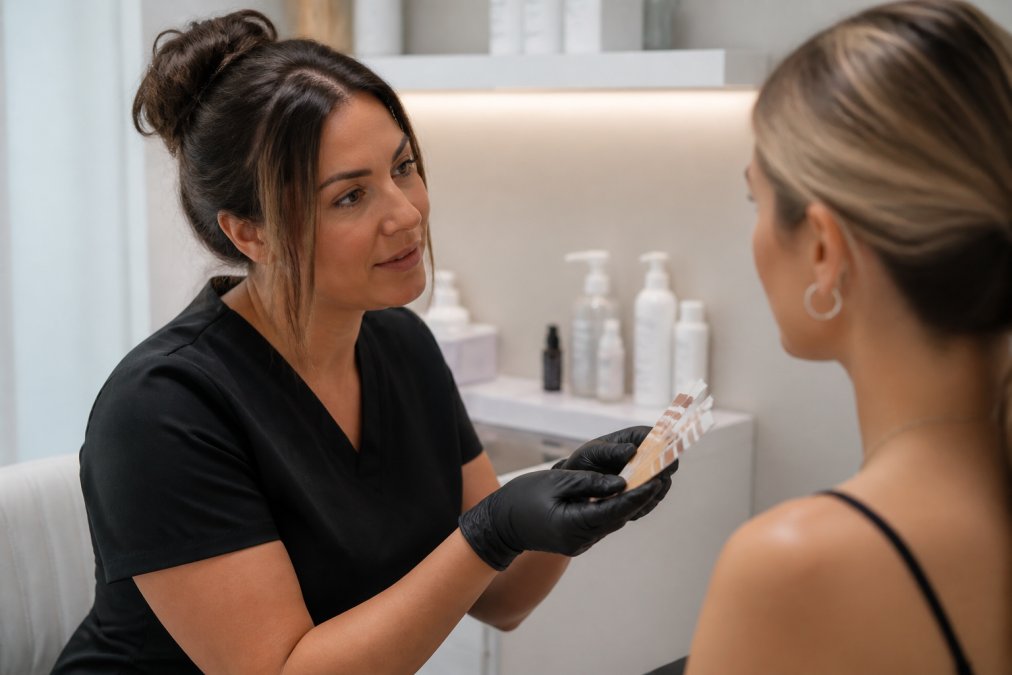
Choosing a provider based on name recognition alone is a mistake. Many national training brands list directories of graduates, but those artists vary widely in experience. Always verify the individual practitioner’s certification and ask to see healed results from their own clients, not the academy’s marketing photos.
Areola Restoration Recovery Timeline: What to Expect
The initial healing phase of areola restoration takes 7 to 14 days, during which the area may feel tender and appear darker than the final result. Over the following four to six weeks, the pigment softens. Most clients need a touch-up at the eight to twelve week mark to perfect color saturation and symmetry.
| Recovery Phase | What to Expect | Typical Duration |
|---|---|---|
| Initial Healing | Tenderness, darker pigment, light scabbing | 7 to 14 days |
| Pigment Settling | Color softens, skin texture improves | 2 to 6 weeks |
| Touch-Up Session | Final color correction and blending | 8 to 12 weeks |
| Full Maturation | Final results visible, scar tissue remodeling | 3 to 6 months |
Plan your procedure when you have no major events for at least two weeks. You will need to keep the area clean, dry, and out of direct sunlight during initial healing.
Scar Camouflage Consultation Questions to Ask
A consultation separates a confident expert from someone overstating their skills. Ask directly about their experience with your specific scar type, trauma, surgical, or acne scarring, and request healed results on similar skin tones.
Ask about pigment formulation and whether they use medical-grade pigments for compromised tissue. Inquire about hygiene and sterile environment protocols. A reputable artist will welcome these questions.
Your skin is not a canvas for experimentation. The right practitioner treats restorative tattooing as a clinical procedure first and an artistic one second. If an artist cannot clearly explain how they handle pigment migration risks or tissue healing for your specific situation, consider that a red flag.
The choice between Restorative Ink and a local paramedical clinic reflects whether you need training or treatment. For women who have lived through surgery, significant weight loss, or the skin changes of menopause, the value lies in a practitioner who sees you as an individual. GloVolution combines certified paramedical artistry with clinical-grade technology and personalized care. Book an appointment to discuss how restorative tattooing can help you feel at home in your skin.
Frequently Asked Questions
What is the difference between restorative ink and standard paramedical tattooing?
Restorative ink refers to specialized pigments designed for compromised tissue, such as scars, stretch marks, and areola restoration. Standard paramedical tattooing might use more general pigments. The key difference lies in the formulation, which is often tested for safety on scar tissue and designed to match skin tones more precisely for a natural camouflaging effect.
How do I verify the safety standards of a paramedical tattoo clinic?
Ask about their hygiene protocols during your consultation. A reputable artist will use a sterile environment with single-use needles and medical-grade pigments. You should also ask to see their certification and training in paramedical techniques specifically. Don’t hesitate to ask about how they handle cross-contamination and what their sanitation process is between clients.
What should I look for in a portfolio for areola or scar restoration?
Look for before-and-after photos of clients with similar skin tones and scar types to yours. Pay attention to the color matching and how well the pigment blends with the surrounding skin over time, not just right after the procedure. Ask about the age of the photos and if you can speak with a past client about their experience and the longevity of their results.