
Table of Contents
- What Drives the Cost of Paramedical Scar Camouflage
- How Many Sessions for Scar Camouflage Results
- Scar Revision Versus Plastic Surgery: Cost and Outcomes
- Finding a Qualified Paramedical Tattoo Artist
Last Updated: August 25, 2026
What Drives the Cost of Paramedical Scar Camouflage
Paramedical scar camouflage costs depend on area size, scar depth, and texture. A small surgical scar on your arm costs far less than covering stretch marks across your abdomen or thighs. Shallow scars respond faster than keloids or hypertrophic scars that require multiple sessions to build pigment retention and blend with surrounding skin.
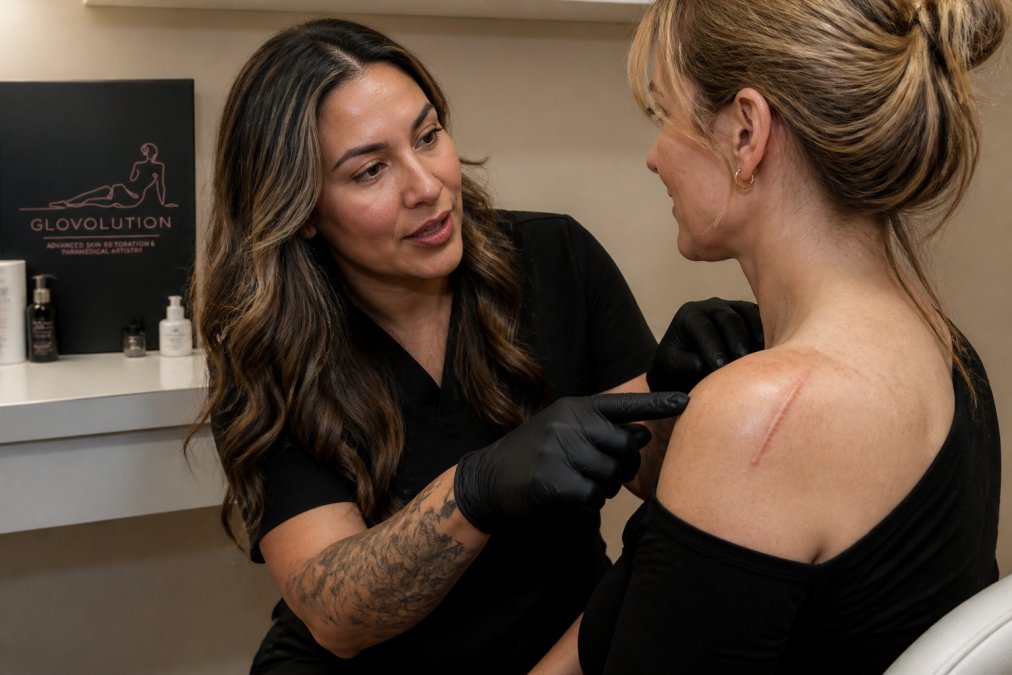
Scar type matters too. Clean surgical scars are straightforward to camouflage, while acne scars, stretch marks, and irregular post-surgical texture demand more precision and often more sessions. Your skin tone and pigment color matching also factor in, darker skin tones or significant hyperpigmentation require specialized medical-grade pigments and careful color analysis to avoid creating new visibility problems.
A professional paramedical tattoo artist will assess your skin elasticity, dermal layer thickness, and healing capacity before quoting a price. That assessment prevents overpaying for a procedure that won’t work on your specific skin.
Ask upfront whether your quote includes touch-ups. Some artists bundle one follow-up session into the initial cost; others charge separately.
How Many Sessions for Scar Camouflage Results
Most people need 2-4 sessions to see meaningful results, though some scars resolve in one (peer-reviewed research). The first session establishes color match and pigment depth. Your skin’s healing response determines whether you’ll need a second pass, some people’s dermal layers accept pigment differently, and the artist may need to adjust needle depth or pigment concentration on follow-up.
Stretch mark camouflage typically requires more sessions than surgical scar revision because the texture is diffuse. You’re blending pigment across irregular skin with hypopigmentation alongside stretched tissue, demanding strategic layering and patience.
Most artists recommend 6-8 weeks between appointments to allow your skin to fully heal and show true pigment retention (peer-reviewed research).
Plan for at least 2 sessions spaced 6-8 weeks apart. Budget your time and money accordingly, this isn’t a one-visit fix for most scars.
Scar Revision Versus Plastic Surgery: Cost and Outcomes
Paramedical scar camouflage and surgical scar revision solve different problems. Scar revision physically restructures scar tissue through excision, Z-plasty, or other surgical techniques. It’s invasive, requires downtime, and typically costs more upfront.
Paramedical tattooing camouflages scars using medical-grade pigments to match surrounding skin tone and create the visual illusion of normal skin. No incisions. No sutures. Minimal downtime. The trade-off is that paramedical camouflage works best on scars with relatively normal texture, if your scar is severely raised or deeply indented, you might benefit from surgical revision first, then camouflage to perfect the color match.
For many people with post-surgical or stretch mark concerns, paramedical camouflage alone delivers the confidence boost they need without surgical recovery. For others with severe keloid or hypertrophic scarring, surgical revision followed by camouflage produces the best aesthetic improvement.
The real consideration isn’t which costs less, it’s which actually solves your specific scar problem.
Finding a Qualified Paramedical Tattoo Artist
Not all tattoo artists are trained in paramedical camouflage. This is clinical work, not decorative. You need someone with specific certifications in scar revision and paramedical tattooing, ideally with additional training in dermatological consultation and color theory for skin tone matching.
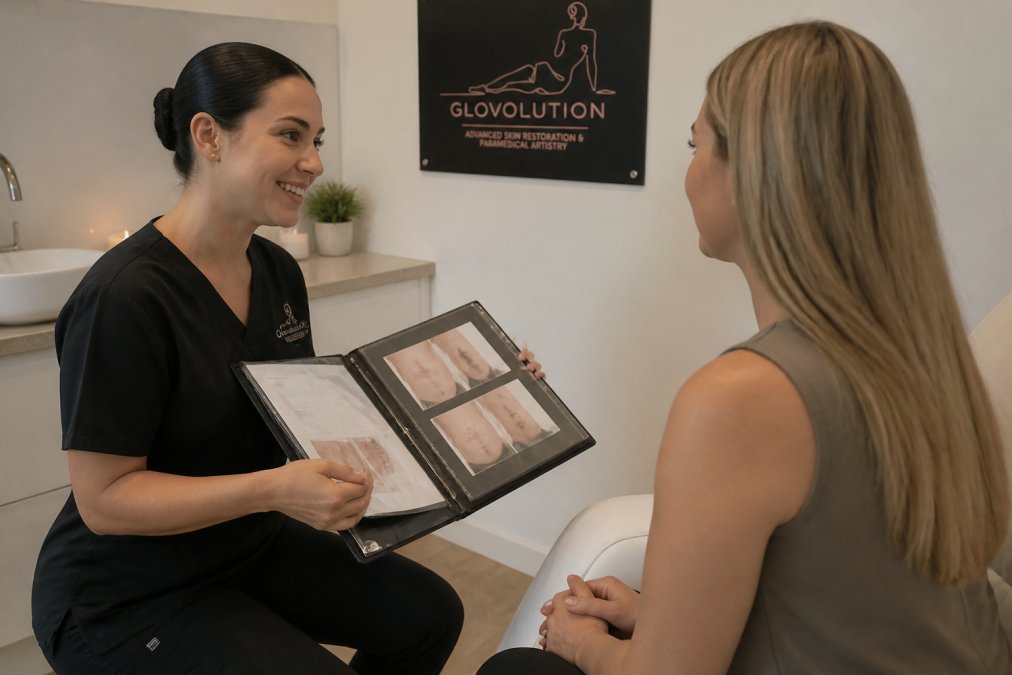
Check credentials carefully. Look for artists who’ve completed formal paramedical certification programs, not just general tattoo training. Ask about their experience with your specific scar type, someone experienced with surgical scars may have less expertise with stretch marks or post-cancer reconstruction.
Portfolio review is non-negotiable. Before-and-after photos should show realistic results on various skin tones and scar types. If an artist won’t share detailed before-and-afters, that’s a red flag.
Ask about their aftercare protocol and pigment retention expectations. Paramedical pigments fade over time, typically 30-50% over 3-5 years depending on sun exposure and your skin’s healing characteristics (peer-reviewed research). A qualified artist will explain this honestly and discuss maintenance sessions if you want long-term color stability.
Scar Revision & Camouflage is a specialized clinical process that combines dermatological understanding with artistic precision, examining your specific scar tissue, skin tone, and healing capacity before designing a treatment plan that actually fits your skin.
Scar camouflage is a clinical restoration process that demands precision, patience, and realistic expectations. Finding an artist with genuine paramedical training and a track record on scars like yours matters far more than chasing the cheapest quote. Book a consultation to discuss your scar and get a personalized assessment of what results are achievable for your skin.
Frequently Asked Questions
Q: How many sessions does paramedical scar camouflage typically require?
A: Most clients need 2-4 sessions spaced 6-8 weeks apart for optimal results. The exact number depends on scar depth, size, skin tone, and how well pigment retains in your skin. Your paramedical tattoo artist will assess your scar during a consultation and outline a realistic timeline. Follow-up appointments may be needed as pigment naturally fades over time.
Q: Is paramedical scar camouflage better than plastic surgery?
A: Both approaches have different strengths. Scar revision through paramedical tattooing uses pigment implantation to visually minimize scars without surgery, requires less downtime, and works well for flat or slightly raised scars. Plastic surgery physically removes or restructures scar tissue but involves more recovery and cost. Your choice depends on scar type, skin health, budget, and goals. A qualified paramedical tattoo artist can advise whether camouflage suits your specific scar or if surgical consultation is worth exploring.
Q: What makes a paramedical tattoo artist qualified to do scar camouflage?
A: Look for artists with formal paramedical tattooing certification, specialized training in color matching and skin tone analysis, and a portfolio of scar camouflage work. Verify their credentials through professional organizations, ask about their experience with your specific scar type, and request before-and-after photos. A qualified artist understands skin anatomy, pigment retention, healing processes, and contraindications, not just tattoo technique. Ask how many scar camouflage procedures they've completed and whether they offer a consultation to assess your scar first.
This article was written using GrandRanker