
Table of Contents
- Why Menopause Causes Dry Skin
- Clinical Skincare for Aging Skin: Your Daily Foundation
- Best Professional Treatments for Menopausal Skin
- How to Improve Skin Elasticity After Menopause
Last Updated: August 24, 2026
Why Menopause Causes Dry Skin
Menopause triggers dramatic skin changes because estrogen production plummets. Estrogen directly influences how much moisture your skin retains and how quickly your skin barrier repairs itself. When estrogen levels drop, your skin loses its ability to hold water effectively, leading to menopausal dryness that feels relentless.
Estrogen stimulates sebum production and collagen synthesis, both of which keep skin plump and hydrated (peer-reviewed research). Without adequate estrogen, your skin produces less natural oil, cell turnover slows, and the lipid barrier weakens. This is real physiological change requiring a real response.
Clinical Skincare for Aging Skin: Your Daily Foundation
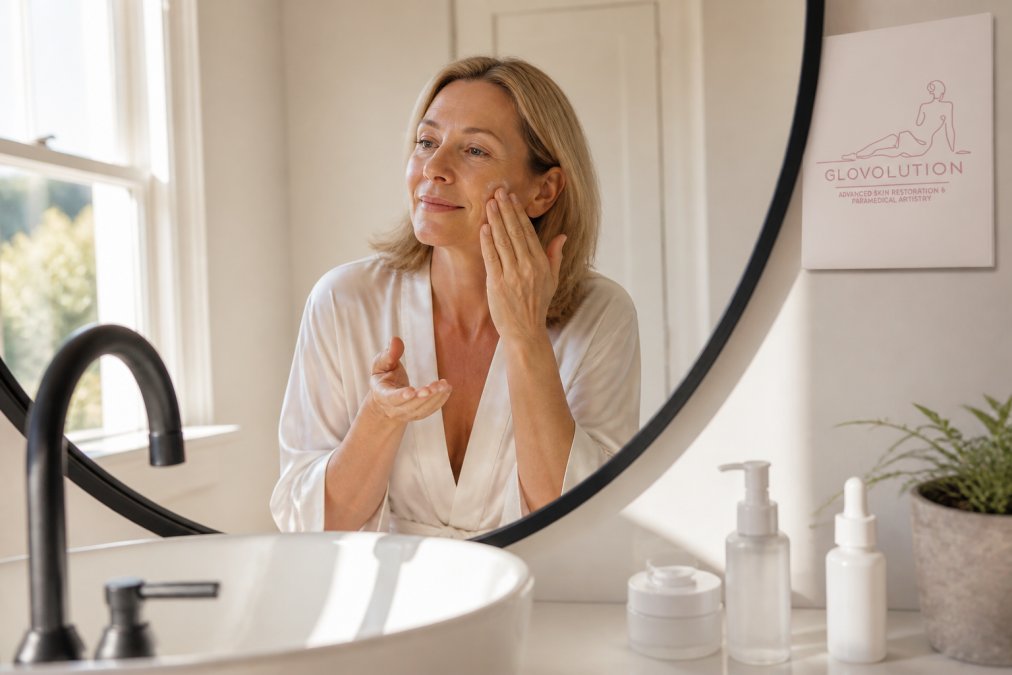
Your daily routine is where the real work happens. You need a three-step foundation that addresses hydration, barrier repair, and protection without stripping what little moisture your skin has left.
Start with a gentle cleanser that won’t compromise your lipid barrier. Cleansing milk or a non-foaming formula removes impurities without that tight, squeaky feeling that signals damage. Harsh cleansers accelerate water loss.
Layer hydration strategically. Apply hyaluronic acid to damp skin, it draws moisture in but only works if moisture is present. Follow with a moisturizer containing ceramides and glycerin. Ceramides patch holes in your skin barrier, while glycerin pulls water deeper into the dermis. Finish with broad-spectrum sunscreen daily. Sun damage accelerates collagen breakdown, and your skin is already losing collagen fast enough without UV exposure making it worse.
If your skin feels tight after cleansing, you’re using the wrong cleanser. That tightness means your barrier is being disrupted, and disrupted barriers leak water constantly.
Best Professional Treatments for Menopausal Skin
Professional treatments work because they stimulate collagen synthesis at depths your at-home routine can’t reach. When your skin is struggling with hormonal shifts, clinical-grade technology becomes your accelerator.
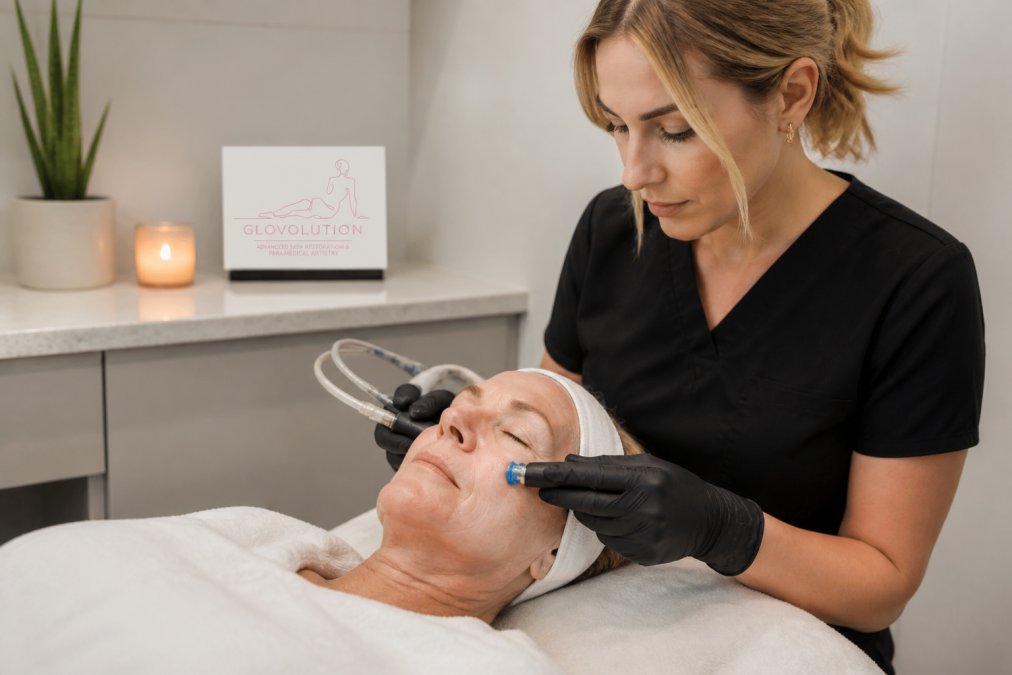
Advanced facial treatments designed for mature skin address multiple concerns simultaneously. Treatments like Hydra Facial and Nanoinfusion Facial deliver hydration and active ingredients directly into compromised skin while stimulating cell turnover. For deeper restoration, collagen-stimulating protocols trigger your skin’s natural repair response. Your body produces collagen when it perceives controlled injury; these treatments create that signal without visible damage.
Facial Peels remove dead surface cells that accumulate when cell turnover slows, revealing fresher skin underneath and allowing your moisturizers to penetrate more effectively.
Lasting change comes from consistency. Professional treatments work best paired with a solid home routine and multiple sessions spaced strategically. GloVolution specializes in personalized treatment planning that builds collagen over time rather than chasing temporary fixes, because what you’re after is skin that actually functions better, not just looks better for a week.
How to Improve Skin Elasticity After Menopause
Skin elasticity depends on collagen and elastin, both of which your body produces less of as estrogen declines. You can’t reverse this entirely, but you can slow it and rebuild what you’ve lost.
Collagen synthesis happens when your skin perceives a reason to repair itself. Professional treatments create that stimulus. Consistent use of retinoids at home also triggers collagen production, though introduce them slowly on already-compromised skin. Antioxidants like vitamin C support collagen stability and protect against further breakdown. Sun protection is non-negotiable. UV damage breaks down existing collagen and prevents new collagen from forming.
Meaningful improvement in elasticity takes time and consistent treatment. Your skin will feel firmer, look less crepey, and actually function better because you’re working with biology strategically.
Menopausal skin dryness feels relentless because your skin has fundamentally changed. A routine designed for your 30s won’t cut it now. You need a clinical approach that addresses the hormonal reality of your skin and stimulates the collagen your body isn’t producing on its own. The American Academy of Dermatology recommends a multi-layered approach combining hydration, barrier repair, and professional treatments for optimal results in mature skin. GloVolution offers personalized treatment planning that builds sustainable skin health through advanced facial treatments and collagen-stimulating protocols tailored to hormonal shifts. Research on estrogen’s role in skin health confirms that clinical interventions combined with targeted home care produce measurable improvements in skin barrier function and elasticity. Book an appointment to develop a strategy that actually works for your skin now.
=== FAQ ANSWERS (audit these too, same rules) ===
[1] Q: What causes menopausal skin dryness?
A: Menopause triggers a sharp drop in estrogen, which directly affects sebum production and the skin barrier’s ability to retain moisture. Estrogen deficiency reduces collagen synthesis and lipid barrier function, leading to transepidermal water loss. This combination makes skin feel tight, flaky, and uncomfortable. The dryness typically worsens during perimenopause and postmenopause as hormone levels continue to decline.
[2] Q: What ingredients work best for menopausal skin dryness?
A: Look for hyaluronic acid, ceramides, glycerin, and peptides to restore hydration and strengthen the lipid barrier. Vitamin C and antioxidants support collagen synthesis and protect against environmental damage. Omega-3 fatty acids help rebuild skin elasticity. A gentle cleanser, quality moisturizer, and broad-spectrum sunscreen form the foundation. Clinical skincare for aging skin should focus on barrier repair rather than harsh exfoliation or active ingredients that irritate compromised skin.
[3] Q: How long does it take to see results from professional treatments for menopausal skin?
A: Results vary depending on the treatment. Advanced facial treatments targeting collagen stimulation can show visible improvement in skin texture and hydration, with continued improvement over several months as collagen rebuilds. Most women benefit from a series of treatments spaced strategically for optimal results. Your esthetician can outline a personalized timeline based on your specific skin concerns and goals during a consultation.
Frequently Asked Questions
What causes menopausal skin dryness?
Menopause triggers a sharp drop in estrogen, which directly affects sebum production and the skin barrier's ability to retain moisture. Estrogen deficiency reduces collagen synthesis and lipid barrier function, leading to transepidermal water loss. This combination makes skin feel tight, flaky, and uncomfortable. The dryness typically worsens during perimenopause and postmenopause as hormone levels continue to decline.
What ingredients work best for menopausal skin dryness?
Look for hyaluronic acid, ceramides, glycerin, and peptides to restore hydration and strengthen the lipid barrier. Vitamin C and antioxidants support collagen synthesis and protect against environmental damage. Omega-3 fatty acids help rebuild skin elasticity. A gentle cleanser, quality moisturizer, and broad-spectrum sunscreen form the foundation. Clinical skincare for aging skin should focus on barrier repair rather than harsh exfoliation or active ingredients that irritate compromised skin.
How long does it take to see results from professional treatments for menopausal skin?
Results vary depending on the treatment. Advanced facial treatments targeting collagen stimulation can show visible improvement in skin texture and hydration, with continued improvement over several months as collagen rebuilds. Most women benefit from a series of treatments spaced strategically for optimal results. Your esthetician can outline a personalized timeline based on your specific skin concerns and goals during a consultation.
This article was written using GrandRanker