
Table of Contents
- Why Loose Skin Happens After Weight Loss
- Non-Surgical Skin Tightening Options That Work
- How to Improve Skin Elasticity After Weight Loss
- Skin Restoration Timeline: What to Expect
Last Updated: August 17, 2026
Why Loose Skin Happens After Weight Loss
Your skin doesn’t shrink back on its own timeline. After significant weight loss, loose skin happens because your skin has spent months or years stretched to accommodate a larger body. The collagen and elastin fibers that keep skin firm get damaged during that stretch, and they don’t magically repair themselves once the weight is gone.
The real issue isn’t that your skin is "bad", it’s that skin elasticity has limits. When you lose weight quickly, your skin can’t keep pace with the change underneath. Gradual weight loss gives skin more time to retract, but even then, factors like age, genetics, and how long you carried the extra weight all play a role in how much your skin can bounce back.
This is where most people get frustrated. They’ve done the hard work of losing weight, and now they’re dealing with a problem that no amount of diet or exercise alone will fully resolve. The loose skin isn’t a reflection of failure, it’s a normal physiological response to significant body composition change.
Non-Surgical Skin Tightening Options That Work
If you’re not ready for surgery, non-surgical approaches can improve skin texture and firmness without downtime. These treatments work by stimulating collagen production, which is the protein your skin relies on for structure and elasticity.
Radiofrequency therapy uses controlled heat to trigger the body’s natural collagen-building response. The heat penetrates deeper than surface-level treatments, encouraging the skin to rebuild from within. Results develop gradually over weeks and months as new collagen forms. Most people see noticeable improvement after a series of sessions.
Laser-based tightening works similarly but uses light energy instead of radio waves. These treatments can target specific areas and work well for mild to moderate skin laxity. The downtime is minimal, you might see slight redness that fades within hours.
Microneedling creates controlled micro-injuries that prompt your skin to repair itself by producing more collagen. When combined with serums or growth factors, microneedling can improve skin texture and firmness. It’s less aggressive than surgical options but requires multiple sessions spaced weeks apart.
At GloVolution, advanced treatments like Rezenerate and Nanoinfusion Facials are designed specifically for skin that needs collagen stimulation and restoration. These clinical-grade approaches focus on building skin integrity from within rather than just treating the surface.
The trade-off with non-surgical options is that results are gradual and cumulative. You won’t see dramatic change after one session. But for mild to moderate loose skin, these approaches can deliver meaningful improvement without surgery.
How to Improve Skin Elasticity After Weight Loss
Skin elasticity doesn’t improve in a vacuum. What you do with your body after weight loss directly affects how much your skin can tighten and how quickly it happens.
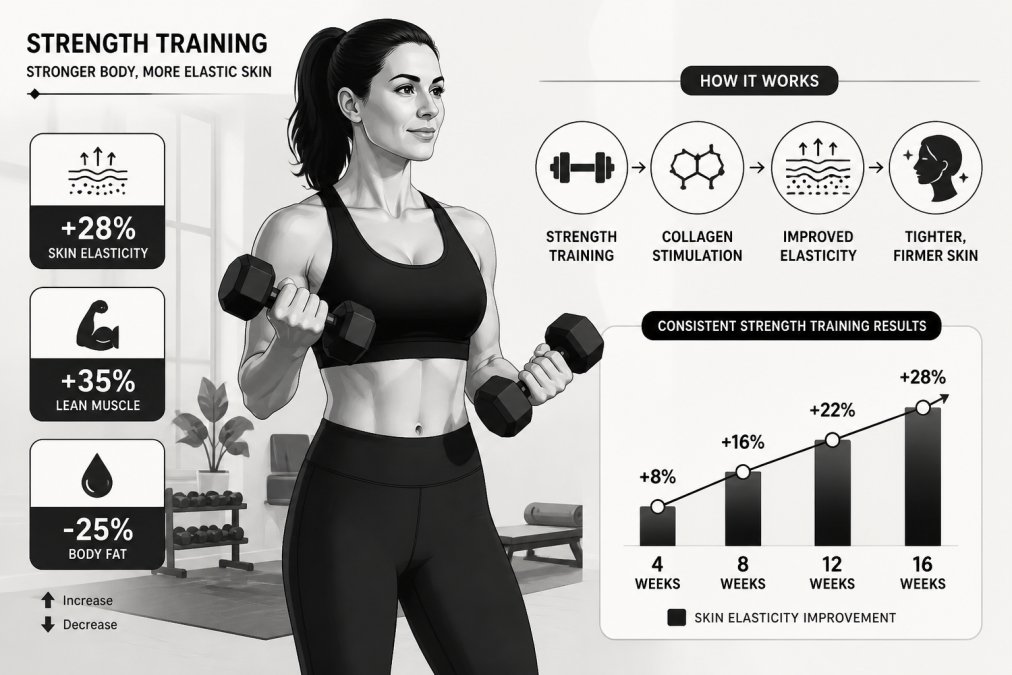
Resistance training matters more than most people realize. When you build muscle, you’re filling out the space under your skin. This doesn’t just look better, it actually supports the skin above it and can make loose skin less noticeable. Progressive strength training over months creates visible changes in how your skin sits on your frame.
Protein intake supports collagen synthesis. Your body needs adequate amino acids to build new collagen fibers. This doesn’t mean extreme protein consumption, but consistent intake of 0.7-1 gram per pound of body weight gives your skin the raw materials it needs to repair and strengthen itself.
Hydration affects skin plumpness and function. When skin is well-hydrated, it looks fuller and more resilient. Dehydration makes loose skin more apparent because the skin loses that supportive plumpness. Drinking adequate water isn’t a magic fix, but it’s a foundational piece of the puzzle.
Vitamin C and omega-3 fatty acids support collagen production and skin health. Vitamin C is a cofactor in collagen synthesis, your body literally cannot make new collagen without it. Omega-3s reduce inflammation and support the structural integrity of skin cells. These aren’t dramatic interventions, but they’re the nutritional foundation that everything else builds on.
Sun protection prevents further collagen breakdown. UV damage accelerates skin aging and damages existing collagen. If you’re working to improve skin elasticity, protecting your skin from sun damage prevents you from fighting a losing battle.
The reality is that these approaches work best in combination. Strength training plus adequate protein plus hydration plus collagen-stimulating treatments create conditions where your skin can actually improve. Any one of these alone produces minimal results.
Skin Restoration Timeline: What to Expect
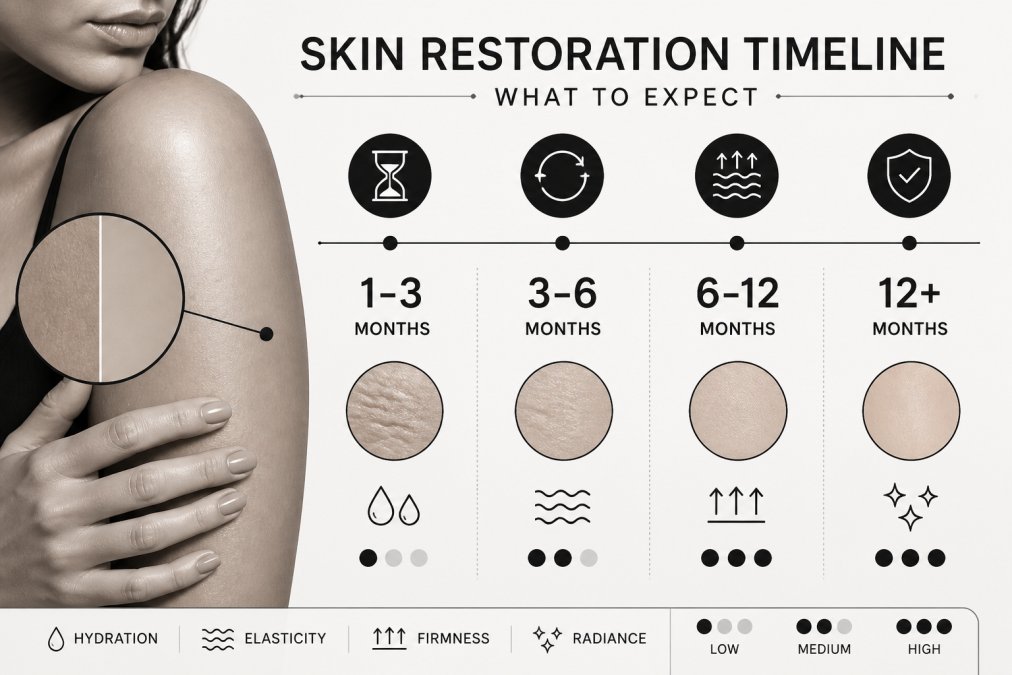
Non-surgical skin restoration is a process, not an event. Understanding the timeline helps you set realistic expectations and stay committed to what actually works.
For non-surgical treatments, visible results typically emerge after 4-6 weeks. That’s when new collagen production becomes noticeable in skin texture and firmness. Most people see meaningful improvement after 2-3 months of consistent treatment and lifestyle changes. Dramatic results take longer, usually 3-6 months of sustained effort.
The recovery period depends on the treatment type. Radiofrequency therapy has minimal downtime, you might see slight redness that resolves within hours. Laser treatments may cause mild swelling for a day or two. Microneedling can leave the skin slightly red and sensitive for 24-48 hours. None of these require you to take time off work or hide from your life.
Maintenance matters. Once you’ve achieved improvement, you’ll need periodic touch-up treatments to maintain results. Collagen production doesn’t stop once you reach a certain point, it’s an ongoing process. Most people benefit from maintenance sessions every 3-6 months.
Surgical body contouring, if you go that route, has a different timeline. Recovery typically takes 2-4 weeks before you can return to normal activities, with full results visible after 3-6 months as swelling resolves and scars mature. The advantage is more dramatic results in a single procedure.
The psychological timeline is worth mentioning. Many people feel more confident the moment they commit to a plan, even before seeing physical results. Once you see initial improvements, motivation increases. This isn’t just about skin, it’s about feeling like you’re taking control of how you look and feel.
Loose skin after weight loss is frustrating, but you’re not stuck with it. Whether you choose non-surgical skin restoration treatments or explore surgical options, the key is understanding what actually works and committing to a realistic timeline. At GloVolution, personalized skin restoration plans address not just the skin itself, but the underlying collagen production and tissue integrity that create lasting results. Book an appointment to discuss which approach aligns with your goals and timeline.
Frequently Asked Questions
Can you actually fix loose skin after significant weight loss without surgery?
Non-surgical options can improve skin restoration after weight loss, but results depend on factors like age, how much weight you lost, and skin elasticity. Radiofrequency therapy, microneedling, and laser treatments stimulate collagen production and can tighten skin laxity over time. However, if you have substantial excess skin, surgical body contouring may deliver faster, more dramatic results. A consultation helps determine what's realistic for your specific situation.
How long does skin restoration take after weight loss?
The skin restoration timeline varies widely. Non-surgical treatments typically show gradual improvement over 3 to 6 months with multiple sessions. Surgical procedures like abdominoplasty can show results within weeks, with full recovery taking 4 to 8 weeks. Your body continues to adjust for up to a year after major weight loss. Starting treatments too soon after weight loss (before your weight stabilizes) can waste time and money.
What's the difference between non-surgical skin tightening and body contouring surgery?
Non-surgical skin tightening options use energy-based treatments to stimulate collagen and gradually improve skin elasticity and tissue firmness. Body contouring involves surgical excision of excess skin. Non-surgical approaches have minimal downtime but deliver subtle results; surgery removes loose skin directly, producing more visible change but requiring recovery time. The right choice depends on how much excess skin you have and how quickly you want results.
Does resistance training actually help with loose skin after weight loss?
Yes. Building muscle through resistance training fills out loose skin and improves appearance by increasing subcutaneous volume. Strength training also supports collagen production and skin tone. Combined with adequate protein intake and hydration, muscle building can noticeably reduce the appearance of skin laxity. It won't eliminate excess skin on its own, but it's a valuable part of skin restoration strategy.
This article was written using GrandRanker