
Table of Contents
- Understanding Your Surgical Scar Before You Start
- Step 1: Prep the Skin for Camouflage Makeup
- Step 2: Color Correct and Conceal the Scar
- Step 3: Set It and Make It Last
- Frequently Asked Questions
Last Updated: September 5, 2026
Learning how to camouflage surgical scars is about more than hiding a mark; it is about reclaiming the skin you feel at home in. This guide from GloVolution walks you through a safe, professional approach to scar camouflage, from understanding your healing timeline to applying makeup that lasts. We focus on techniques that respect sensitive skin while delivering natural-looking coverage that restores confidence.
Understanding Your Surgical Scar Before You Start
Scar camouflage only works well on scars that are fully healed and mature. A surgical scar typically needs several months to settle, and applying makeup too early can trap bacteria and irritate fragile tissue.
Color is the first clue about what your scar needs. A scar that appears darker than your skin has hyperpigmentation and benefits from color correction. A pale, flat scar with less pigment than the surrounding skin has hypopigmentation and requires a different approach to match. A raised, thick scar responds differently to makeup than a flat one, and product consistency matters more as the texture changes.
The texture of your scar also guides your technique. Flat scars take coverage easily, while indented or raised scars need a thinner, buildable formula applied in layers rather than one thick coat. Recognizing these differences before you begin prevents the caked, obvious look that draws attention instead of reducing it.
Step 1: Prep the Skin for Camouflage Makeup
Preparation determines whether your camouflage lasts an afternoon or a full day. Start with clean, dry skin and gently exfoliate the scar area to remove dead cells that cause patchy application.
Apply a thin layer of a silicone-based primer or a gentle moisturizer and let it absorb fully for several minutes. This creates a smooth base that helps the concealer blend rather than settle into scar tissue lines. For sensitive post-surgical skin, choose products labeled hypoallergenic and non-comedogenic to avoid clogging pores.
A common mistake is skipping the patch test on a small area first. Post-surgery skin can react to ingredients that are fine elsewhere, so testing 24 hours ahead prevents an uncomfortable reaction on the day you need coverage.
Step 2: Color Correct and Conceal the Scar
Color correction neutralizes the discoloration before you apply your skin-tone concealer. For a scar with redness, use a green corrector to cancel it out. For hyperpigmentation that reads brown or purple, a peach or orange corrector balances the tone.
Apply the corrector with a synthetic brush using light, tapping motions. Synthetic brushes matter here because they do not absorb product the way natural bristles do, and they glide more smoothly over scar tissue. Let the corrector dry, then apply a full-coverage concealer matched to your exact skin tone, building thin layers until the scar disappears into the surrounding skin.
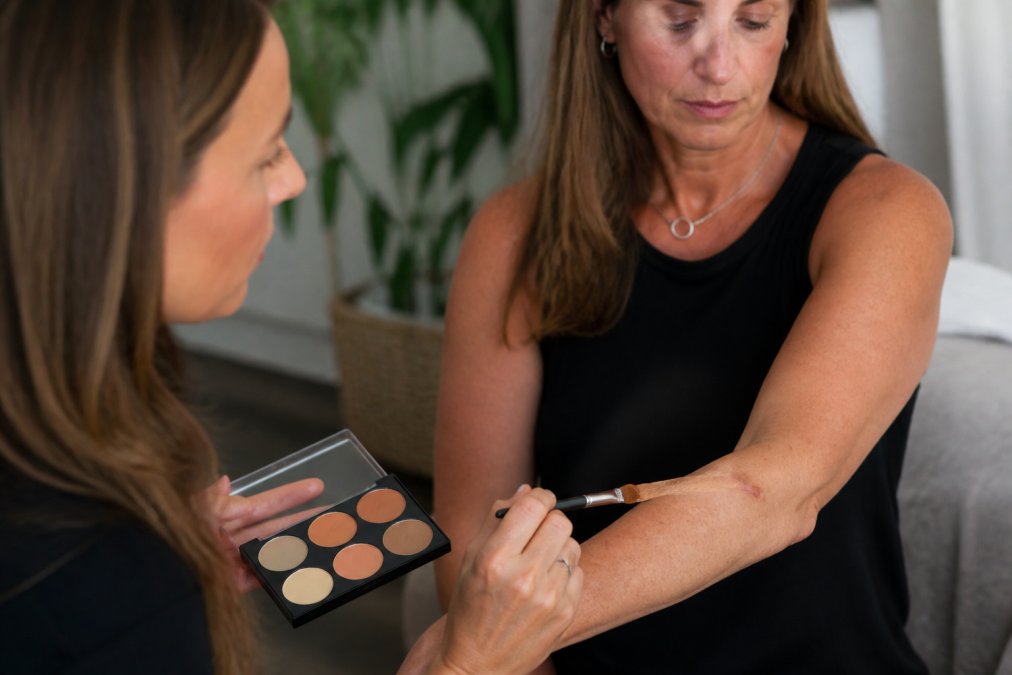
The right concealer consistency depends on your scar. A gel consistency works well for slightly raised scars because it sits on the surface without caking. A cream formula suits flat scars and offers more coverage. Blend the edges thoroughly so the product melts into your natural skin, leaving no visible border.
Step 3: Set It and Make It Last
Setting is what turns good coverage into long-wear camouflage. Dust a finely milled translucent setting powder over the concealed area using a fluffy brush, pressing it in gently rather than sweeping it across.
For scars in high-friction areas or those exposed to sweat, finish with a transfer-resistant setting spray. This locks the makeup in place and keeps it waterproof through daily activity.
Sun protection is non-negotiable for scar health. Healing scars darken quickly with UV exposure, so apply a broad-spectrum sunscreen over the area daily, even when your makeup already contains SPF. For those who want a longer-term solution, paramedical tattooing offers pigment deposition that lasts far longer than daily makeup, and at GloVolution, our certified paramedical tattoo artistry provides Scar Revision & Camouflage designed to restore natural skin integrity. If you are exploring complementary ways to support your skin’s overall appearance during the healing process, a Hydra Facial can gently refresh and hydrate the surrounding area.
A healed, mature scar responds best to camouflage. Prep with gentle exfoliation and primer, correct color before concealing, and always set with powder and a protective sunscreen to keep coverage natural and lasting.
Frequently Asked Questions
What is the difference between scar revision and scar camouflage?
Scar revision is a surgical or medical procedure that alters the scar tissue itself to make it less visible. Scar camouflage uses cosmetic techniques, like specialized makeup or paramedical tattooing, to cover the scar without changing the underlying tissue. Camouflage is a non-invasive option that can be used alone or after scar revision to achieve the desired look.
How long should I wait before seeking professional scar camouflage?
Your scar needs to be fully healed before any camouflage, which usually takes several months. For professional treatments like paramedical tattooing, a consultation with a qualified professional can assess your scar’s maturity and determine the right time to start.
Can paramedical tattooing effectively hide surgical scars?
Yes, paramedical tattooing is a highly effective option for many surgical scars. A certified artist uses pigment deposition to match the surrounding skin tone, which can address hypopigmentation and help the scar blend into the skin. It is a specialized technique that requires a professional with experience in scar tissue to achieve natural-looking results.
Concealing a surgical scar takes patience and the right technique, but the reward is a smoother, more confident reflection. At GloVolution, we pair clinical-grade skin restoration with certified paramedical artistry to help you feel at home in your skin again. Book an appointment to explore how our personalized scar camouflage and restorative treatments can support you.
This article was written using GrandRanker