
Table of Contents
- Why Acne Scars Look Worse as You Age
- Atrophic Acne Scar Treatment Options
- Collagen Induction Therapy for Mature Skin
- Recovery Time for Scar Revision Treatments
Last Updated: August 30, 2026
Why Acne Scars Look Worse as You Age
Your acne scars didn’t actually get deeper, your skin did. After forty, collagen production plummets, making old scars suddenly visible again. A scar that was barely noticeable becomes a shadow you see every time you look in the mirror. Hormonal shifts, especially around menopause, accelerate this process.
The good news: this same collagen loss makes professional treatments work better now. Your skin needs a signal to rebuild, and treatments that stimulate collagen production rather than just filling in scars temporarily deliver real results.
Acne scars don’t get worse with age, your skin’s ability to support them does. The collagen loss that makes aging visible also makes treating acne scars after forty more effective when you target collagen production directly.
Atrophic Acne Scar Treatment Options
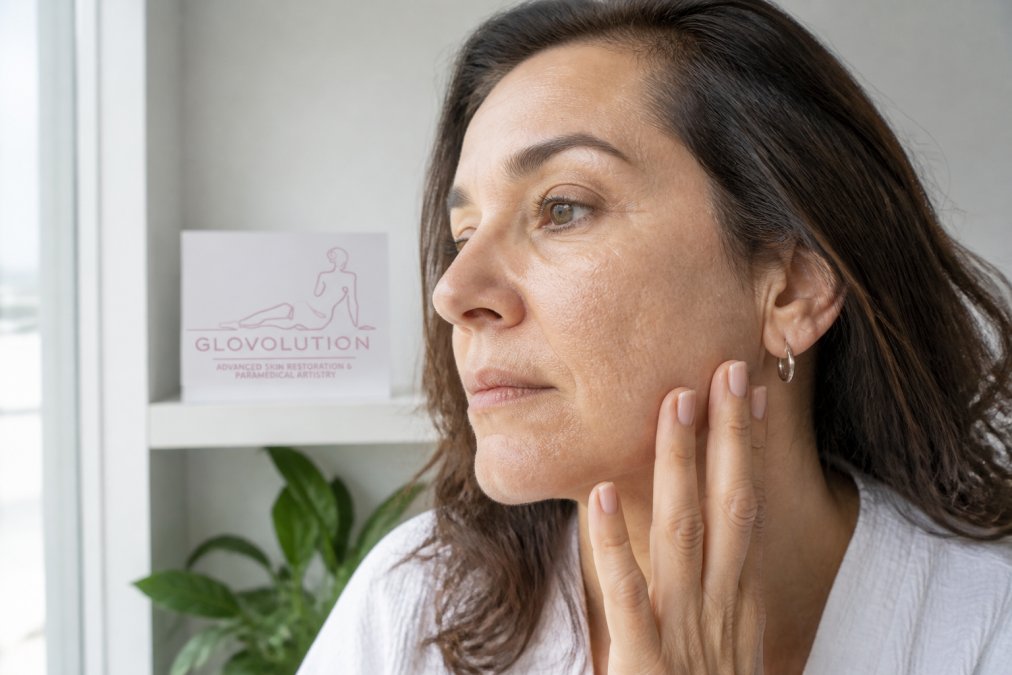
Most acne scars in your forties are atrophic, indented or pitted. These catch light and shadow, becoming more visible as your skin loses volume.
Facial Peels remove the top layer of skin and trigger collagen remodeling underneath. For surface-level scarring, a series of peels can smooth texture noticeably.
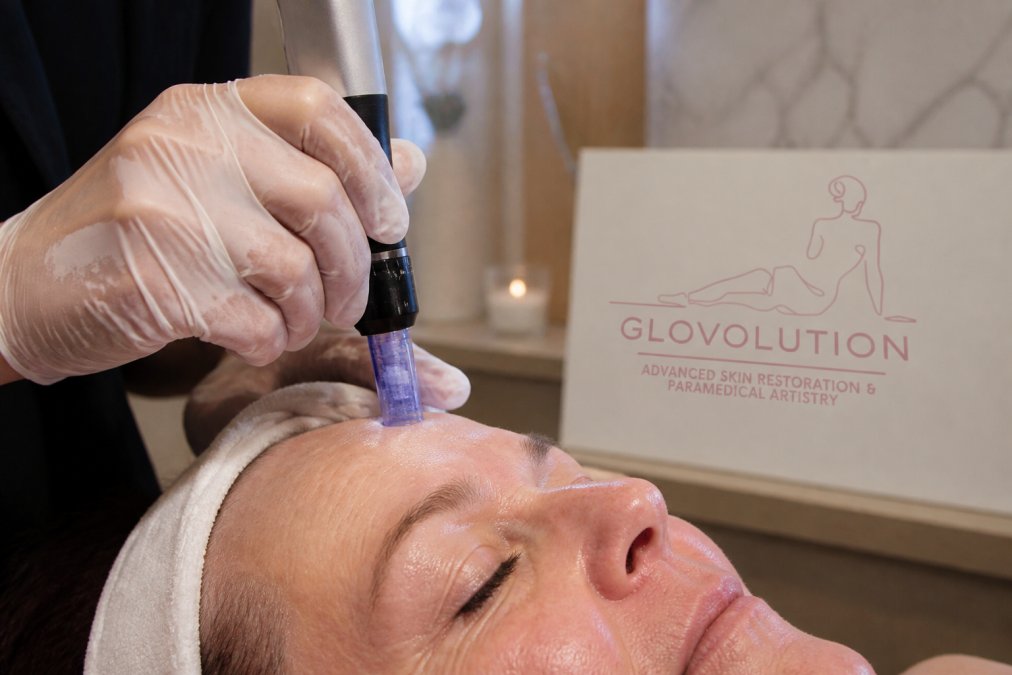
Microneedling (collagen induction therapy) creates controlled micro-injuries to trigger your body’s healing response. It rebuilds collagen from the inside out rather than just resurfacing, working well for atrophic scars.
Subcision is a surgical technique where a needle breaks up scar tissue underneath the skin, allowing it to fill in naturally. Combining subcision with another treatment often delivers better results than any single approach alone.
Laser resurfacing, both ablative and non-ablative, vaporizes or heats damaged skin to stimulate collagen. Ablative lasers are more aggressive with real downtime but powerful for significant scarring. Non-ablative lasers are gentler with less recovery but typically require more sessions.
If you’ve tried one treatment and saw partial improvement, combining approaches often works better than repeating the same one.
Collagen Induction Therapy for Mature Skin
Microneedling is particularly effective for women in their forties and beyond because it directly addresses what’s actually happening to your skin. Instead of working around the problem, it recruits your own fibroblasts to rebuild what you’ve lost.
The process uses a device with tiny needles to create controlled punctures in the skin, triggering an inflammatory response that tells your body to produce new collagen and elastin. Multiple sessions, usually spaced four to six weeks apart, produce cumulative results. Most people see noticeable improvement after three to four treatments, with collagen continuing to remodel for months after each session.
Recovery is mild compared to ablative lasers. You’ll see redness and possibly swelling for 24-48 hours. Most people return to normal activities the next day. For deeper or more stubborn scarring, Scar Revision & Camouflage services can be layered with microneedling to target multiple scar depths at once.
Recovery Time for Scar Revision Treatments
Different treatments have wildly different recovery profiles, and downtime matters at this stage of life.
Microneedling: Minimal downtime. Red for a day or two, back to work immediately.
Chemical peels: Light peels feel like a sunburn for a few days. Medium peels require a week of visible peeling and sensitivity.
Non-ablative laser: Redness for a few days, mild swelling. You can wear makeup to cover it.
Ablative laser: Expect 1-2 weeks of visible healing with oozing, crusting, and significant redness. Plan to stay home for at least a week.
Subcision: Minimal downtime, but bruising can be significant. Plan for a week where you might not want to be seen socially.
| Treatment | Downtime | Visible Recovery | Sessions Needed |
|---|---|---|---|
| Microneedling | 1-2 days | Mild redness | 3-4 |
| Light chemical peel | 3-5 days | Peeling, sensitivity | 4-6 |
| Non-ablative laser | 2-3 days | Mild redness | 4-6 |
| Ablative laser | 7-14 days | Significant crusting | 1-2 |
| Subcision | 3-7 days | Bruising possible | 1-2 |
Treating acne scars after forty takes time and commitment. There’s no single treatment that erases deep scars in one session without serious downtime. But combining approaches strategically, starting with collagen-building treatments like microneedling, then adding subcision or laser for stubborn areas, often delivers transformative results.
At GloVolution, the approach is personalized because your scars are unique. Some clients see improvement with microneedling alone. Others need layered treatments. The key is having a plan that matches your scars, your skin’s capacity to heal, and your real-world schedule.
Treating acne scars after forty requires a strategy that works with your skin’s actual biology. Your skin needs collagen stimulation more than temporary filling. A professional assessment can determine which combination of treatments will work best for your specific scarring pattern and skin type. Book an appointment with GloVolution to develop a personalized scar revision plan focused on long-term collagen restoration and natural-looking results.
Frequently Asked Questions
Why do acne scars become more visible as we age?
Collagen production naturally slows after 40, and skin loses elasticity and thickness. This makes atrophic scars (indented or pitted scars) more pronounced because the surrounding skin can't support them as well. Sun damage and loss of skin volume also amplify the appearance of scarring that may have been less noticeable in your 20s and 30s.
What's the difference between atrophic and hypertrophic acne scars, and does treating them differ after forty?
Atrophic scars are indented or pitted; hypertrophic scars are raised and thick. Treating acne scars after forty requires adjusting for slower healing and thinner skin. Atrophic scars respond well to collagen induction therapy and laser resurfacing, while hypertrophic scars may benefit from subcision or fillers. Recovery time is typically longer after 40 due to slower dermal remodeling.
How long does recovery take after scar revision treatments?
Recovery time for scar revision treatments varies: microneedling typically requires 3-7 days of visible redness, laser resurfacing can take 1-2 weeks for ablative options and 3-5 days for non-ablative, and chemical peels range from a few days to two weeks depending on depth. After 40, healing may take slightly longer because fibroblasts (collagen-producing cells) work more slowly. Most people can return to normal activities within 1-2 weeks.
This article was written using GrandRanker