
Table of Contents
- Microneedling vs. Lasers: The Core Differences
- Microneedling Recovery Time and What to Expect
- Best Skin Treatments for Loose Skin and Sagging
- Post-Treatment Skincare Routine for Long-Term Results
Last Updated: August 23, 2026
Microneedling vs. Lasers: The Core Differences
When you’re considering microneedling vs lasers for skin restoration, you’re looking at two fundamentally different mechanisms that change everything about which one makes sense for your skin.
Microneedling works through collagen induction therapy. Tiny needles create micro-injuries, triggering your body’s natural healing response and collagen production. It’s mechanical, not thermal. Your skin does the heavy lifting.
Laser treatments use concentrated light energy to create controlled thermal injury in the dermis. Different wavelengths target different concerns, pigmentation, wrinkles, texture, or skin laxity. The heat stimulates collagen remodeling, but the laser does the work, not your body’s response.
Here’s the practical part: microneedling is gentler on darker skin tones because it’s purely mechanical, not reliant on heat or light absorption. Laser treatments, particularly ablative lasers, carry higher risk of post-inflammatory hyperpigmentation in deeper skin tones.
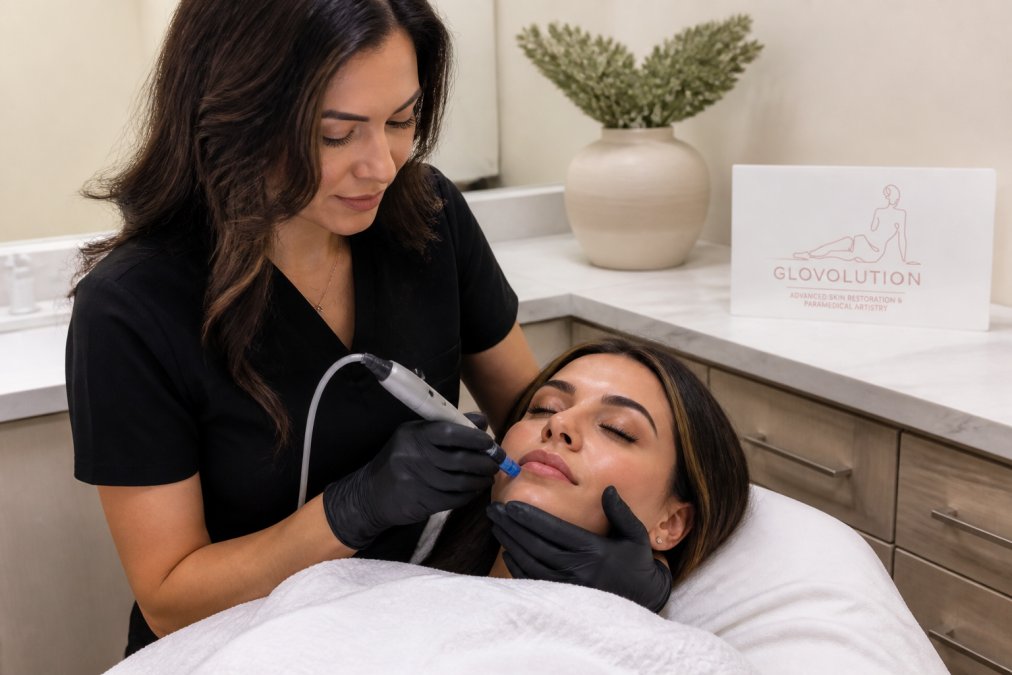
Microneedling typically requires 3-4 sessions spaced 4-6 weeks apart. Lasers can sometimes deliver visible improvement in fewer sessions, depending on the type and your concern. Fractional lasers allow faster healing than ablative options but still require multiple sessions for most concerns.
Microneedling Recovery Time and What to Expect
Microneedling recovery is one of its biggest advantages. You’re looking at 24-48 hours of visible redness and mild swelling (the FDA). By day three, most people return to normal activities. You can wear makeup after 24 hours.
The real recovery happens under the surface over 4-6 weeks as collagen builds. Full effects appear over time as your skin produces new structural proteins.
Laser recovery depends on the type. Non-ablative fractional lasers have minimal downtime, similar to microneedling, 24-72 hours of redness. Ablative lasers require 7-14 days of visible healing and peeling, with full recovery taking 2-3 weeks (the American Academy of Dermatology).
During the recovery period, your skin actively remodels collagen. Protecting your skin barrier directly impacts results. Sun exposure during healing can trigger post-inflammatory hyperpigmentation, particularly in darker skin tones.
Start sun protection before your treatment. Using broad-spectrum SPF 30+ for two weeks pre-treatment primes your skin to heal cleanly without pigmentation complications ([the FDA](https://www.fda.gov/drugs/understanding-over-counter-medicines/sunscreen-how-help-protect-your-skin-sun)).
Best Skin Treatments for Loose Skin and Sagging
When loose skin and sagging are your primary concern, the choice shifts toward laser treatments, specifically fractional or ablative options that stimulate significant collagen remodeling and skin tightening.
Microneedling addresses texture, fine lines, and superficial scarring beautifully. For skin laxity and loss of elasticity, you need deeper collagen stimulation. Radiofrequency microneedling (like Vivace) bridges this gap by combining needling with RF energy, delivering more dramatic skin tightening than traditional microneedling alone.
Fractional lasers excel at this, creating controlled thermal injury deep in the dermis and triggering strong collagen production. For significant sagging, ablative fractional lasers deliver the most dramatic results, though they carry longer downtime. If you’re dealing with textural concerns alongside sagging, Scar Revision & Camouflage and Rezenerate treatments can complement laser work for more comprehensive skin restoration.
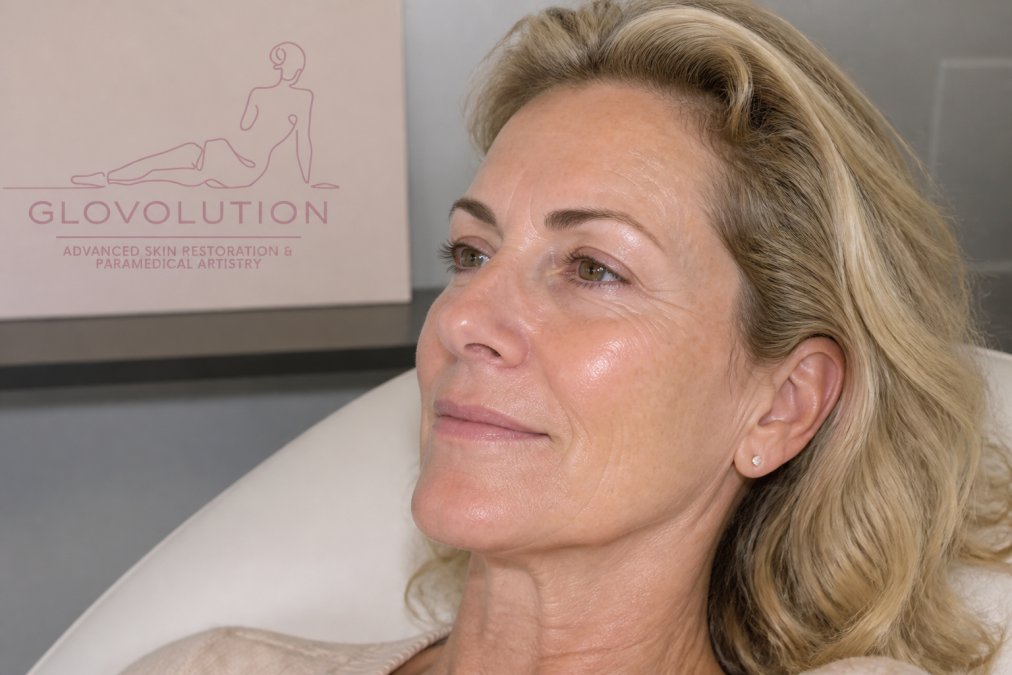
Fitzpatrick skin type matters here more than anywhere else. Lighter skin types (I-II) tolerate ablative lasers well. Medium skin tones (III-IV) often do better with fractional non-ablative options to minimize hyperpigmentation risk. Darker skin (V-VI) typically benefits most from microneedling or RF microneedling, which avoid the pigmentation complications that heat-based treatments can trigger.
GloVolution’s approach emphasizes long-term collagen stimulation over quick fixes. Whether that’s through advanced microneedling protocols or complementary treatments, the goal is sustainable skin integrity.
For loose skin specifically, fractional lasers and RF microneedling outperform traditional microneedling. Choose based on your skin type, downtime tolerance, and how aggressive you want the collagen stimulation to be.
Post-Treatment Skincare Routine for Long-Term Results
Your post-treatment skincare routine determines whether results stick around or fade.
Immediately after treatment (days 1-3), simplify: gentle cleanser, hydrating serum, moisturizer, and broad-spectrum SPF 30+. Avoid actives, exfoliants, retinoids, and anything irritating. Your skin barrier is compromised.
Days 4-14, gradually reintroduce products conservatively. Once your skin fully heals (2-3 weeks), resume your normal routine. Microneedling and laser results improve with cumulative collagen production, so consistent sun protection, hydration, and occasional maintenance treatments matter.
Some people see sustained results from annual microneedling sessions. Others need treatments every 6-12 months. Laser results tend to last 1-2 years before a refresh. Your skin type, age, sun exposure, and genetics all factor in.
Collagen naturally breaks down and replaces over time. Maintenance isn’t failure, it’s how you sustain results.
Skipping sun protection post-treatment is the fastest way to undo your results and trigger hyperpigmentation, particularly in medium to dark skin tones. This isn’t optional.
Frequently Asked Questions
What's the main difference between microneedling and laser treatments?
Microneedling uses tiny needles to create controlled micro-injuries that trigger collagen production, while lasers use heat energy to stimulate collagen and remove damaged skin layers. Microneedling is minimally invasive with minimal downtime, while lasers, especially ablative ones, create more significant thermal injury and typically require longer recovery. Both work through collagen induction, but the mechanism and intensity differ. Your skin type, concerns, and tolerance for downtime determine which suits you best.
How long is microneedling recovery time compared to laser?
Microneedling recovery is typically 24-48 hours for redness and mild swelling, with most people returning to normal activities immediately. Laser recovery varies: non-ablative lasers have 1-3 days downtime, while ablative lasers require 7-14 days or longer. If you have a busy schedule or prefer minimal disruption, microneedling's shorter recovery window makes it more practical. Both treatments benefit from consistent post-treatment skincare to maximize results.
Which treatment works better for loose skin and sagging?
Laser treatments, particularly fractional and radiofrequency-assisted options, deliver stronger skin tightening results due to deeper dermal remodeling and controlled thermal injury. Microneedling is effective for texture and fine lines but provides gentler tightening. For significant laxity, lasers offer more dramatic outcomes, though multiple sessions of either treatment build cumulative results over time. A consultation with a qualified professional helps determine whether your specific concerns require the intensity of laser treatment or respond well to microneedling's collagen stimulation.
Choosing between microneedling and lasers comes down to your specific concern, your skin type, and your downtime tolerance. Both trigger collagen production, they just work differently. GloVolution specializes in personalized treatment planning that matches your skin’s needs to the right protocol, whether that’s microneedling, advanced laser work, or a combination approach designed for long-term restoration rather than temporary results.
This article was written using GrandRanker