
Table of Contents
- Understanding Menopause Skin Dryness: The Hormone Connection
- Best Clinical Skincare for Aging Skin During Menopause
- How to Restore Skin Barrier After 50
- Professional Facial Treatments for Dry Skin That Deliver Results
Last Updated: August 18, 2026
Understanding Menopause Skin Dryness: The Hormone Connection
Menopause skin dryness isn’t just about needing a better moisturizer. When estrogen levels drop during perimenopause and postmenopause, your skin loses its ability to retain moisture effectively because estrogen drives collagen and sebum production, both critical for hydration and resilience.
At the cellular level, your skin barrier becomes compromised. The lipid barrier that locks in hydration deteriorates, transepidermal water loss increases, and your skin thins as collagen production slows. You’re dealing with dryness, sensitivity, and a dull appearance all at once.
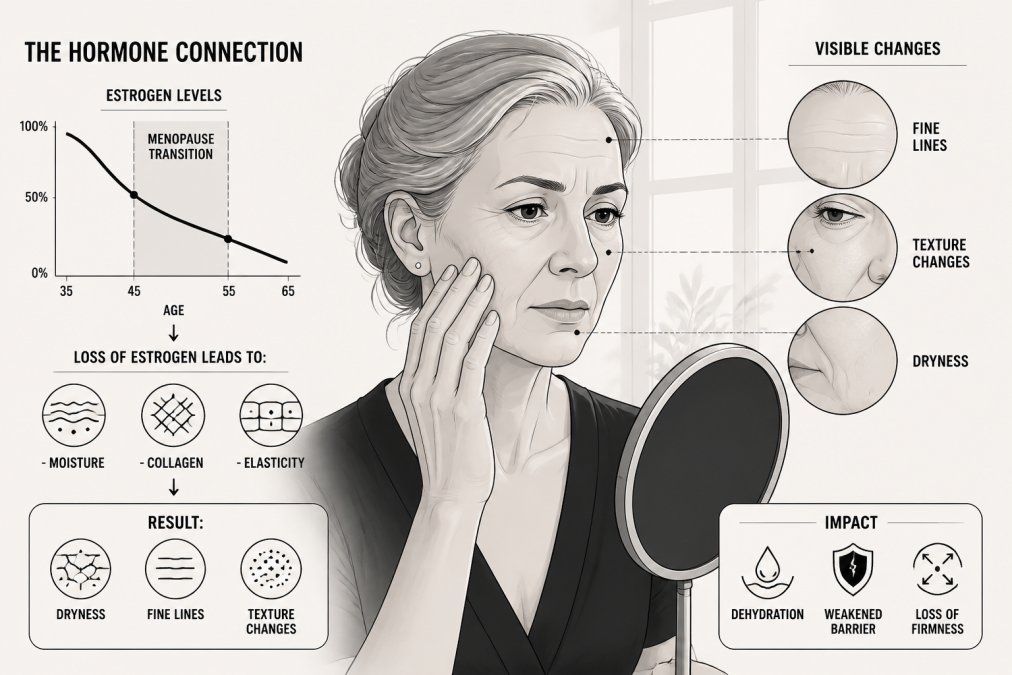
Many women find that skincare routines that worked for years suddenly stop working. That’s not failure, it’s your skin’s biology changing. Once you understand what’s driving the dryness, you can actually address it.
The real issue isn’t dryness itself, it’s a weakened skin barrier. Products that only add moisture without repairing the barrier won’t stick around. You need ingredients that restore the lipid barrier while hydrating.
Best Clinical Skincare for Aging Skin During Menopause
Clinical skincare during menopause means moving beyond basic moisturizers to products formulated for barrier repair and collagen support. The most effective ingredients fall into three categories: humectants, emollients, and occlusives.
Hyaluronic acid and glycerin are humectants that pull moisture into your skin, but they only work if your barrier is intact enough to hold that moisture. You also need emollients like ceramides, which are literally the building blocks your skin barrier has lost. Occlusives like petroleum jelly seal everything in place. The combination matters most: hyaluronic acid + ceramides + an occlusive creates the environment your skin needs to heal.
Antioxidants like vitamin C belong in your routine, but timing matters. Use vitamin C in the morning under sunscreen. At night, focus on barrier repair. Many women layer too many actives during menopause when their skin is already stressed. Simplify. Repair first.
Avoid over-exfoliation during menopause. Your skin barrier is already compromised. Physical exfoliants and harsh chemical peels can push your skin into a reactive cycle where it gets drier and more sensitive. Gentle exfoliation once a week maximum, if at all.
How to Restore Skin Barrier After 50
Barrier restoration is the foundation of treating menopause skin dryness. The process takes consistency, typically 4-6 weeks before you see real improvement.
Start with a simple cleansing routine. Avoid hot water, which strips your skin’s remaining natural oils. Use lukewarm water and a gentle cleansing milk rather than foam or gel. After cleansing, apply hydrating and barrier-repair products to damp skin, damp skin absorbs products better than dry skin.
Layer strategically: apply hyaluronic acid or glycerin first to damp skin, follow with a ceramide-rich moisturizer, and finish with an occlusive. At night, use a heavier occlusive like petroleum jelly. During the day, use a lighter occlusive under sunscreen.
Hydration from the inside matters too. Omega-3 fatty acids found in fish, flax, and walnuts support skin health at a cellular level. Lifestyle habits either support or sabotage barrier repair. Hot showers damage your barrier by stripping oils. Excessive sun exposure without protection accelerates skin aging and barrier damage. SPF isn’t optional during menopause, it’s essential. Use sunscreen daily, even on cloudy days.
Professional Facial Treatments for Dry Skin That Deliver Results
When home care isn’t enough, professional treatments can accelerate barrier repair and stimulate collagen production. The most effective treatments focus on collagen stimulation rather than temporary hydration.
Advanced facial treatments like Hydra Facial and Nanoinfusion Facial deliver hydrating serums deep into the skin while stimulating circulation. Radiofrequency treatments stimulate collagen production, addressing the underlying loss of elasticity that drives menopause dryness. Facial peels remove dead skin cells and trigger your skin’s natural healing response, which includes increased collagen and improved barrier function.
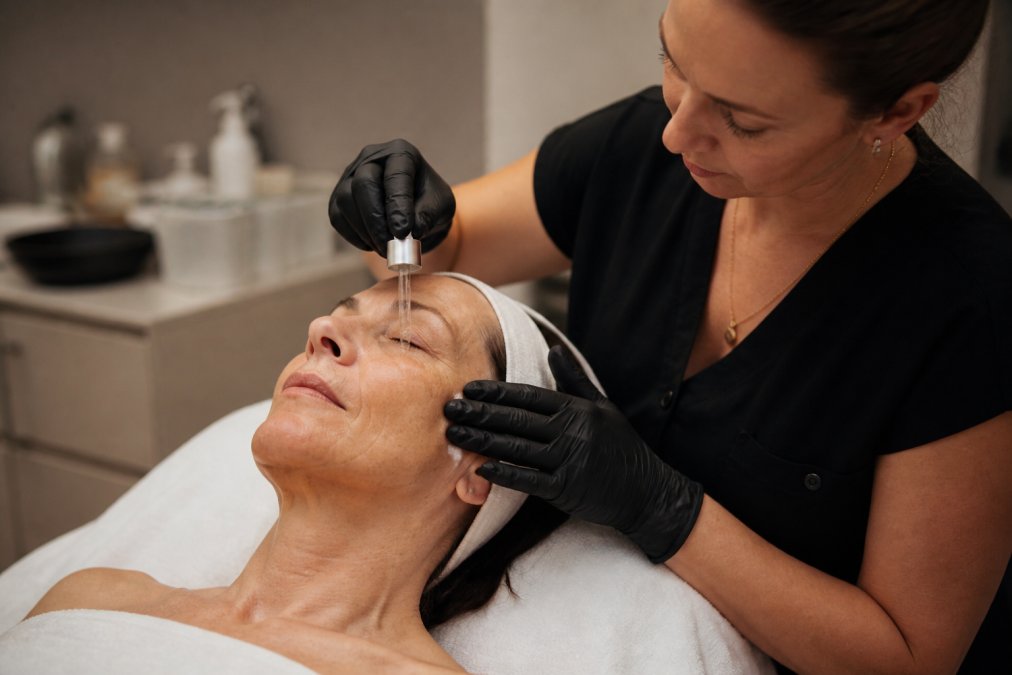
Professional treatments reach layers of skin that topical products can’t penetrate and trigger biological responses, collagen stimulation, improved circulation, accelerated cell turnover, that products alone can’t achieve. For menopause skin, treatments that stimulate collagen address the root cause of dryness: loss of structural support.
GloVolution specializes in personalized treatment planning for mature, hormonally shifting skin. Rather than offering one-size-fits-all treatment, the team assesses your specific skin condition and designs a strategy that addresses both immediate dryness and long-term skin restoration. Menopause skin often needs different approaches at different stages: aggressive barrier repair initially, then collagen stimulation, then maintenance.
Professional treatments work best when paired with a solid home routine. The treatments stimulate your skin’s healing response, but your daily skincare maintains and reinforces that progress.
Most women see noticeable improvement in skin texture, hydration, and elasticity within 4-6 weeks of consistent professional treatment combined with appropriate home care.
Menopause skin dryness is frustrating, but it’s fixable. The approach that works combines barrier repair at home with professional treatments that stimulate collagen and restore skin integrity. GloVolution offers personalized treatment strategies designed specifically for women navigating hormonal changes, using advanced facial treatments and clinical skincare protocols that deliver long-term skin restoration. Book an appointment to discuss which combination of treatments and home care will work best for your skin.
Frequently Asked Questions
Does dry skin from menopause eventually go away on its own?
Menopausal skin dryness typically persists as long as estrogen levels remain low, which can last years into postmenopause. While some women find their skin stabilizes over time, waiting passively usually means years of discomfort and visible texture changes. The good news: targeted skincare and professional treatments can dramatically improve hydration and skin quality regardless of where you are in menopause.
What's the link between low estrogen and skin dryness?
Estrogen plays a direct role in sebum production and collagen synthesis. During menopause, estrogen deficiency reduces your skin's natural oil production and thins the lipid barrier that holds moisture in. This is why menopausal dryness feels different from typical dry skin, it's not just about hydration, it's about your skin's fundamental ability to retain it. Understanding this connection helps explain why standard moisturizers alone often don't solve the problem.
What ingredients should I look for in a moisturizer for menopausal skin?
Prioritize three types of ingredients: humectants (hyaluronic acid, glycerin) that draw water into the skin, emollients (ceramides, peptides) that soften and protect, and occlusives (petroleum jelly, plant oils) that seal moisture in. Look for products with multiple ingredients from each category rather than a single 'hero' ingredient. Serums with hyaluronic acid followed by a ceramide-rich moisturizer is a proven combination for menopausal skin.
When should I consider professional treatments instead of just skincare products?
If you've been consistent with a solid routine for 8-12 weeks and still see flaking, dullness, or loss of elasticity, professional treatments can accelerate results. Advanced facial treatments stimulate collagen production and improve the skin barrier in ways topical products can't reach. A consultation with a skin professional can assess whether your skin needs clinical intervention or if adjustments to your home routine would help first.
This article was written using GrandRanker