
Table of Contents
- What Areola Restoration Actually Involves
- The 3D Nipple Tattoo Healing Process: What to Expect Week by Week
- Choosing a Paramedical Tattoo Artist: What Actually Matters
- Areola Restoration Insurance Coverage: Navigating the Financial Side
Last Updated: August 14, 2026
What Areola Restoration Actually Involves
Areola restoration is one of the most personal, and most overlooked, steps in the breast reconstruction journey. You’ve been through surgery, treatment, and recovery. This part? It’s about coming home to yourself.
Areola restoration reconstructs the nipple-areola complex (NAC) using either surgical techniques or paramedical tattooing (dermopigmentation). Most survivors choose between surgical NAC reconstruction and non-surgical 3D areola restoration through medical tattooing. The non-surgical route has become preferred for many, it’s less invasive, requires no tissue harvesting, and when done by a skilled paramedical tattoo artist, the aesthetic outcome is remarkably realistic.
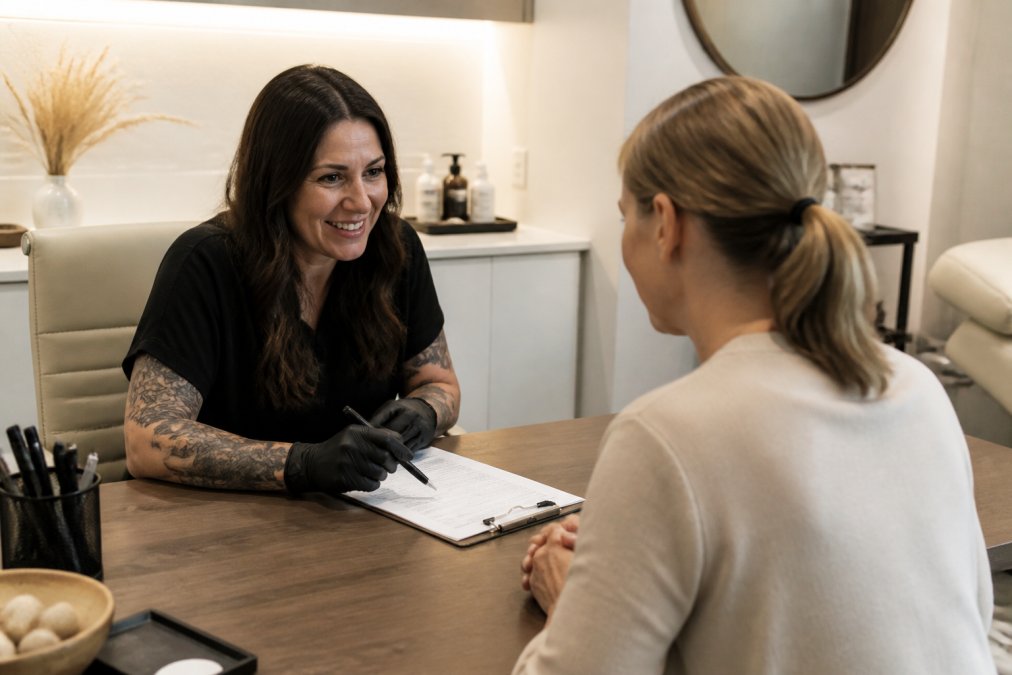
A clinical consultation comes first. The artist assesses your scar tissue, skin tone, and breast symmetry to customize size, shape, color, and placement to your anatomy and preferences. Reconstructed breast skin behaves differently than natural skin, it may be less vascular, have altered sensation, and retain pigment differently. A practitioner experienced in paramedical artistry understands these variables; someone who primarily does decorative tattooing may not.
Ask any prospective artist specifically about their experience with post-mastectomy skin. Scar tissue and reconstructed tissue require different needle depth, pigment saturation, and technique than regular skin. This is a non-negotiable credential to verify.
The 3D Nipple Tattoo Healing Process: What to Expect Week by Week
The 3D nipple tattoo healing process follows a predictable arc, though scar tissue can make it feel less predictable than a standard cosmetic tattoo. According to American Society of Plastic Surgeons guidance on NAC reconstruction, tattooing is typically performed after the reconstructed breast has fully healed, usually several months post-surgery.
Week 1: The area will feel tender and appear darker than the final result. Light weeping, redness, and swelling are normal.
Week 2: Peeling begins. The color looks like it’s disappearing, it isn’t. The top layer of skin is shedding, and pigment sits deeper.
Weeks 3-4: Color softens and skin looks milky or hazy. This is normal as pigment settles into the dermal layer.
Weeks 6-8: The true result emerges. Color stabilizes, 3D shading becomes visible, and depth reads clearly.
Beyond week 8: Full healing and pigment stabilization can take up to 12 weeks, especially on scar tissue with reduced circulation.
Most practitioners schedule a touch-up session at the 6-8 week mark. This is standard, not a sign of failure.
Avoid sun exposure on the treated area during healing. UV light breaks down pigment faster than almost anything else. Once fully healed, use SPF on the area consistently to protect your investment.
| Healing Phase | Timeframe | What You’ll See |
|---|---|---|
| Initial healing | Days 1-7 | Darker color, tenderness, light swelling |
| Peeling phase | Days 8-14 | Color appears to fade, skin sheds |
| Milky/hazy phase | Weeks 3-4 | Muted tones, pigment settling |
| Color stabilization | Weeks 6-8 | True result emerges |
| Full healing | Weeks 8-12 | Final pigment retention confirmed |
Choosing a Paramedical Tattoo Artist: What Actually Matters
Most anxiety around this decision comes from not knowing what questions to ask. Choosing a paramedical tattoo artist for areola restoration isn’t like picking someone for a decorative sleeve, the skill set is genuinely different.
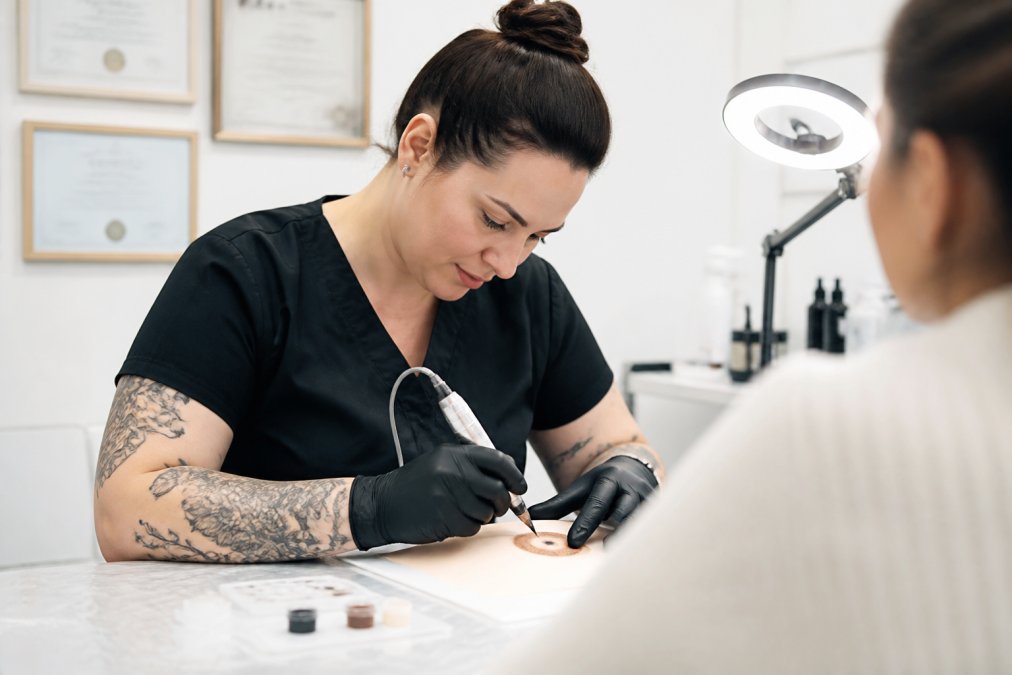
Paramedical tattoo artists train specifically in working with compromised, post-surgical, or scarred skin. They understand how scar tissue accepts pigment differently, how to create realistic 3D nipple projection using shading technique, and how to approach color theory for diverse skin tones.
Here’s what to actually look for:
- Specific portfolio of areola restoration work. Ask to see before-and-after images of post-mastectomy clients.
- Training in paramedical or medical tattooing. This is a distinct certification track from cosmetic tattooing.
- Experience with varied skin tones. Pigment matching across the full spectrum requires real training.
- A thorough consultation process. Any artist who quotes without asking about your surgery history, scar tissue, and skin type isn’t the right fit.
- Transparent touch-up policy. Know upfront whether it’s included.
According to Society of Permanent Cosmetic Professionals resources on paramedical tattooing, practitioners working in paramedical applications should hold specific training beyond standard cosmetic tattoo certification.
Some survivors pursue areola restoration through their plastic surgeon’s office; others work with independent paramedical artists. Neither is automatically superior. What matters is the specific person’s training, portfolio, and approach to your individual anatomy.
The best paramedical tattoo artist for you is the one who asks the most questions before ever picking up a device. A thorough consultation is clinical due diligence.
Areola Restoration Insurance Coverage: Navigating the Financial Side
Areola restoration through tattooing is often covered by insurance. The Women’s Health and Cancer Rights Act, as noted by U.S. Department of Labor guidance on the Women’s Health and Cancer Rights Act, requires group health plans that cover mastectomy to also cover reconstruction of the breast on which the mastectomy was performed, including reconstruction of the other breast to produce a symmetrical appearance, and prostheses and treatment of physical complications.
Areola tattooing as part of NAC reconstruction generally falls under this mandate, but coverage specifics vary significantly by plan and provider.
Here’s a practical approach:
- Call your insurance provider directly and ask whether NAC reconstruction including tattooing is covered under your plan. Reference the Women’s Health and Cancer Rights Act explicitly.
- Get a procedure code from your artist or physician. Medical tattooing for areola restoration is typically billed under specific CPT codes.
- Request pre-authorization in writing before your appointment if possible.
- Ask about out-of-network coverage. Many skilled paramedical artists operate independently.
- Check your Explanation of Benefits carefully after any claim is processed.
If insurance doesn’t cover your situation or you’re working with an out-of-network provider, many artists offer payment plans. The National Breast Cancer Foundation resources for survivors can help you locate support programs.
The areola restoration process for cancer survivors is the final chapter of a long reconstruction story, and it deserves the same care and expertise as every step before it. GloVolution’s 3D Hyperrealism Areola Restoration is built around certified paramedical artistry, personalized pigment matching, and a clinical consultation process that takes your specific anatomy and history seriously. If you’re ready to take this step, book an appointment with GloVolution and have a real conversation about what’s possible for you.
Frequently Asked Questions
What is the difference between surgical nipple reconstruction and medical tattooing for areola restoration?
Surgical reconstruction physically rebuilds nipple projection using local flap techniques, skin grafts, or tissue harvesting, it requires an operating room and recovery time. Medical tattooing, sometimes called dermopigmentation or 3D areola restoration, is a nonsurgical technique that uses pigment and color theory to create the illusion of depth and nipple projection on flat skin. Many survivors do one or both, depending on their reconstructive surgery outcome and personal goals. A clinical consultation helps clarify which path fits your anatomy and timeline.
When is the best time to consider areola restoration after mastectomy or breast reconstruction?
Most practitioners recommend waiting until breast reconstruction is fully healed and the breast mound has settled, typically 4 to 6 months post-surgery, though timelines vary by individual healing and surgical approach. Scar tissue needs to mature before pigment is applied, as fresh scars can affect pigment retention and color accuracy. Your surgeon and paramedical tattoo artist should communicate directly about timing. Rushing the process often means less predictable aesthetic outcomes, so patience here genuinely pays off.
Does insurance typically cover areola restoration procedures?
Under the Women's Health and Cancer Rights Act (WHCRA) of 1998, group health plans that cover mastectomy are required to also cover breast reconstruction, including nipple-areola complex reconstruction. This federal law applies to most employer-sponsored plans. However, coverage specifics vary by plan and provider. Medical tattooing performed by a paramedical artist outside a clinical setting may or may not be covered. Always get a pre-authorization letter and confirm coverage details directly with your insurer before scheduling any procedure.
How long does the 3D nipple tattoo healing process take?
The initial healing phase typically takes 4 to 6 weeks. During the first week, the area may appear darker and slightly raised as pigment settles into scar tissue. Peeling and some fading are normal through weeks two and three. Final color and pigment retention become clearer around the 6-week mark. A follow-up touch-up session is usually scheduled 8 to 12 weeks after the initial appointment to refine color matching and breast symmetry. Full results are assessed after that second session.
What should I look for when choosing a medical tattoo artist for areola restoration?
Look for a certified paramedical tattoo artist with documented training specifically in nipple-areola complex restoration, not just general cosmetic tattooing. Ask to see a portfolio of actual client work on post-mastectomy skin, which behaves differently from unaffected skin. Confirm they understand color theory for pigment matching across varied skin tones, and that they work in a clean, licensed studio environment. A thorough clinical consultation before any commitment is non-negotiable, it tells you a lot about how seriously they take your outcome.
Can you get new nipples after breast cancer treatment?
Yes. Survivors have two main paths: surgical reconstruction using local flap or tissue techniques to create physical nipple projection, followed by areola tattooing for color; or 3D areola restoration tattooing alone, which uses shading and pigment to simulate projection on a flat surface without additional surgery. Both are legitimate options with strong patient satisfaction rates when performed by skilled practitioners. The right choice depends on your surgical history, healing, and what outcome matters most to you personally.
This article was written using GrandRanker