
Table of Contents
- What Non-Surgical Skin Tightening Actually Does
- Top Non-Surgical Skin Tightening Treatments Compared
- Non-Surgical Skin Tightening Recovery Time: What to Expect
- Best Treatments for Loose Skin After Weight Loss
Last Updated: August 29, 2026
What Non-Surgical Skin Tightening Actually Does
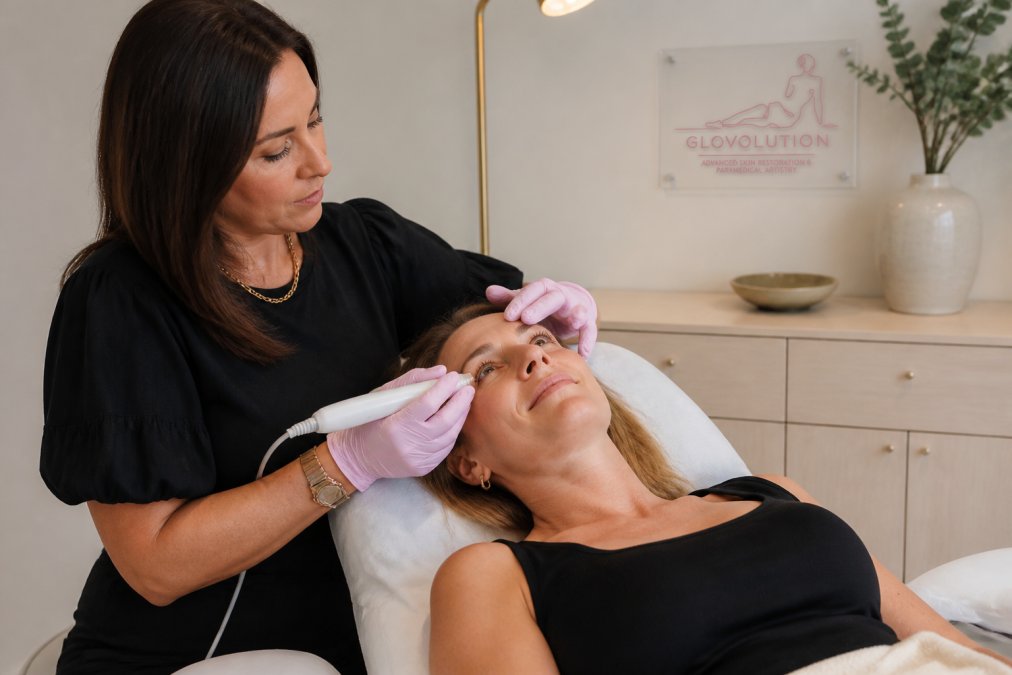
Non-surgical skin tightening uses thermal energy, radiofrequency, ultrasound, or laser technology to stimulate collagen production in deeper skin layers without incisions. The goal is straightforward: trigger your skin’s natural healing response so it firms up and looks more defined. Unlike topical creams, these treatments reach the dermal layers where structural changes actually happen.
You’re not getting a facelift-level transformation, you’re getting noticeable improvement in skin laxity and fine lines. Most treatments require multiple sessions spaced weeks apart because collagen remodeling takes time.
GloVolution specializes in advanced skin restoration using clinical-grade technology paired with personalized treatment planning. The focus is on collagen stimulation over temporary fixes, which means results build over time and last longer than injectable fillers or topical treatments alone. Beyond facial tightening, services like Hydra Facial and Nanoinfusion Facial complement deeper treatments by prepping and maintaining skin health between sessions.
Top Non-Surgical Skin Tightening Treatments Compared
The landscape of non-surgical skin tightening has expanded significantly. You’re navigating several legitimate approaches, each with different mechanisms, recovery profiles, and results timelines.
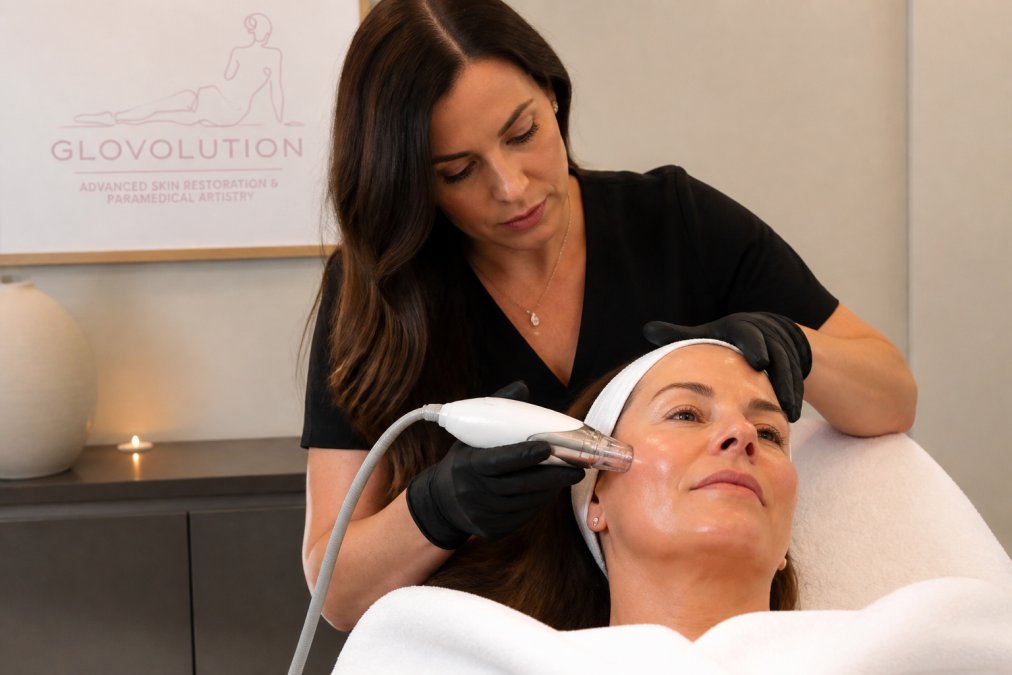
Ultherapy uses micro-focused ultrasound to reach the deep tissue layer that surgeons lift in a facelift. It’s FDA-cleared for the brow, chin, neck, and décolletage. One session is often enough, with results appearing gradually over 2-3 months.
Thermage FLX delivers radiofrequency energy to heat deeper skin layers, triggering collagen contraction and production. The newer version includes built-in cooling for comfort and a larger treatment tip.
Morpheus8 combines microneedling with fractional radiofrequency, reaching up to 8 millimeters deep. It’s aggressive enough to address acne scars and significant laxity, yet safe for all skin tones. Most people need 3-4 sessions spaced 4-6 weeks apart with 24-48 hours of redness.
Sofwave uses ultrasound technology to target the mid-dermal layer at 1.5mm depth. It’s gentler than Ultherapy, faster (30-45 minutes), and works well for fine lines and early skin laxity.
Vivace RF Microneedling combines 36 gold-plated needles with radiofrequency and LED light therapy. It’s highly customizable with minimal downtime.
Potenza RF Microneedling offers both monopolar and bipolar RF settings, allowing energy delivery at multiple skin depths in one pass. It’s effective for wrinkles, texture, scars, and laxity across face and body.
Exilis Ultra 360 combines radiofrequency and ultrasound for skin tightening plus fat reduction with no downtime.
Clear + Brilliant is a gentle, non-ablative fractional laser that refreshes skin and stimulates collagen without significant downtime. A series of 4-6 treatments works better than a single session.
| Treatment | Technology | Best For | Typical Sessions | Recovery |
|---|---|---|---|---|
| Ultherapy | Micro-focused ultrasound | Neck, jawline, brow laxity | 1 | None to minimal |
| Thermage FLX | Radiofrequency | Overall skin tightening, texture | 1-2 | None |
| Morpheus8 | RF + microneedling | Significant laxity, scars | 3-4 | 1-2 days redness |
| Sofwave | Ultrasound (SUPERB) | Fine lines, early laxity | 1-2 | Minimal |
| Vivace | RF + microneedling + LED | Customized concerns | 3-4 | Minimal to none |
| Potenza | RF + microneedling | Multiple concerns, body areas | 3-6 | 1-2 days |
| Exilis Ultra 360 | RF + ultrasound | Skin tightening + fat reduction | Multiple | None |
| Clear + Brilliant | Fractional laser | Early aging, texture, pores | 4-6 | None to minimal |
The “best” treatment depends on your skin type, the area you’re treating, and how much time you have for results to develop. Darker skin tones tolerate RF and ultrasound better than some laser options. If you have active acne or keloid-prone skin, certain microneedling approaches may not be ideal.
Non-Surgical Skin Tightening Recovery Time: What to Expect
Recovery varies dramatically depending on which treatment you choose. Non-invasive treatments like Ultherapy, Thermage, Sofwave, and Exilis Ultra 360 have essentially zero downtime.
Minimally invasive options like Morpheus8, Vivace, and Potenza involve some visible effects. Expect redness, mild swelling, and possibly tiny pinpoint marks for 24-48 hours. Most people can return to work the next day with makeup, though strenuous exercise and heat exposure should wait 3-5 days.
Minimally invasive doesn’t mean painful. Providers use topical anesthesia, and discomfort during treatment is usually manageable.
Avoid sun exposure for at least one week after any skin tightening treatment. Your skin is more photosensitive during the collagen remodeling phase. Sun exposure can trigger unwanted pigmentation changes and compromise results.
Best Treatments for Loose Skin After Weight Loss
Significant weight loss often leaves loose skin that diet and exercise can’t fix. For mild to moderate laxity, RF microneedling treatments like Morpheus8 or Potenza work well. They’re aggressive enough to stimulate real collagen remodeling across larger areas, face, neck, abdomen, thighs, arms. Most people need 3-4 sessions and see meaningful improvement in firmness.
For more significant laxity, combining treatments often works better. Start with RF microneedling for collagen stimulation, then layer in radiofrequency-only treatments like Thermage or Exilis Ultra 360 for additional tightening. Complementary services like Rezenerate can enhance overall skin quality and support your tightening results.
Loose skin after weight loss is one of the best-case scenarios for non-surgical treatment because the underlying structure is still there, it just needs stimulation to tighten.
If you lost significant weight and have loose skin, RF microneedling combined with radiofrequency treatment gives you meaningful improvement in laxity. Budget for 3-4 sessions over 2-3 months with realistic expectations.
Loose skin and loss of elasticity don’t have to mean surgery is your only option. Non-surgical skin tightening has become sophisticated enough to deliver real, lasting results when you choose the right treatment for your specific concern and commit to the full session series.
GloVolution combines clinical-grade technology with personalized treatment planning focused on collagen stimulation and long-term skin restoration. Whether you’re navigating hormonal changes, weight loss, or simply aging skin, a consultation can clarify which approach will work for your skin type and goals. Book an appointment to discuss your options with someone who specializes in restorative skin care.
Frequently Asked Questions
Q: How long do non-surgical skin tightening results last?
A: Results vary by treatment type. Radiofrequency and ultrasound treatments typically stimulate collagen production over 2-3 months, with results lasting for a significant period for most patients. Maintenance sessions can help extend results. Microneedling-based treatments may require touch-ups. Your provider can recommend a maintenance schedule based on your specific treatment and skin goals.
Q: What's the difference between non-surgical skin tightening recovery time for different treatments?
A: Non-invasive options like Ultherapy, Thermage, and Sofwave have zero to minimal downtime, you can return to daily activities immediately. Minimally invasive treatments like Morpheus8 may involve 1-2 days of mild redness or swelling. Most patients experience no significant disruption to their routine, making these ideal for busy schedules.
Q: Are non-surgical skin tightening treatments suitable for loose skin after significant weight loss?
A: Yes. Treatments like Morpheus8, Thermage, and Vivace RF Microneedling work well for post-weight-loss skin by stimulating collagen and elastin production in stretched tissue. For extensive loose skin, combining treatments or multiple sessions may be necessary. A consultation helps determine whether non-surgical options meet your goals or if surgical alternatives are worth exploring.
This article was written using GrandRanker